
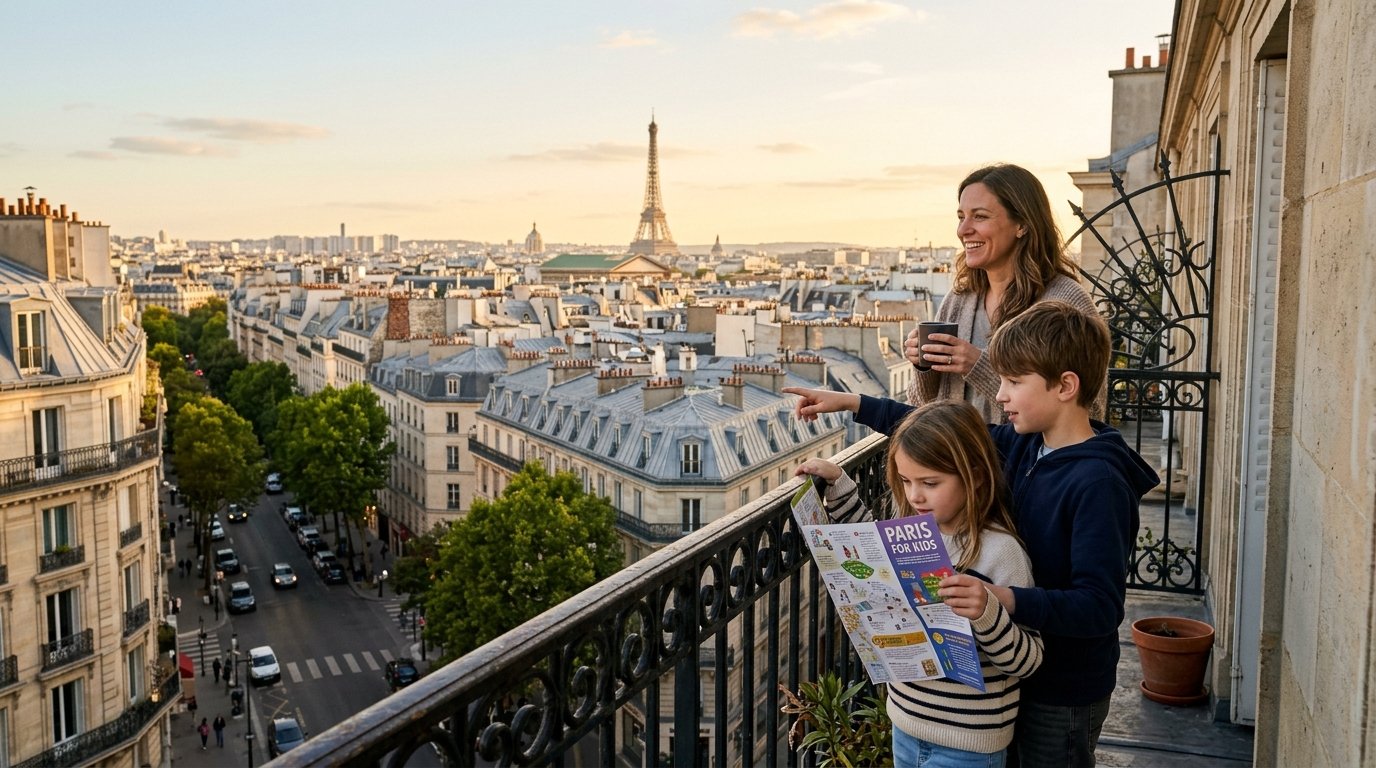
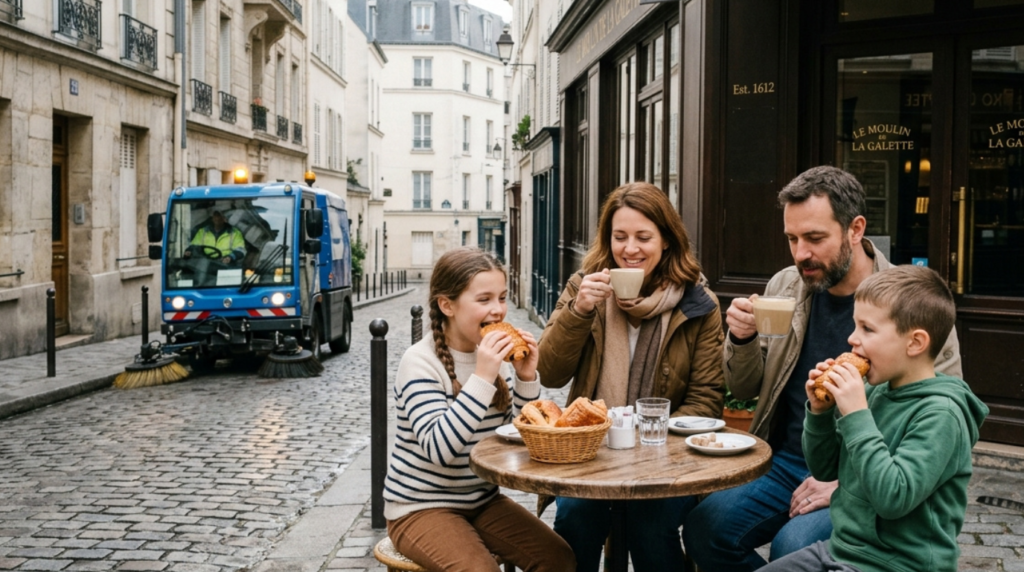
It was 7am on a Tuesday in September and Paris had not yet remembered it was famous. The cafe on Rue Lepic had three tables outside and ours was the only one occupied. Our kids, aged 8 and 11, were already on their second pain au chocolat before they had properly woken up. My wife was watching a street cleaner sluice the cobblestones while a tabby cat ignored everything with complete Parisian indifference. Nobody was queuing. Nobody was posing for a photo. This was Paris before the coaches arrived, and this is the Paris we want to help your family discover.
There is no shortage of Paris travel guides online. Most of them tell you to visit the Eiffel Tower, wander through Le Marais, and eat at a brasserie near your hotel. What they rarely tell you is how to do any of those things without wasting half a day in a queue, paying twice what something is worth, or arriving somewhere famous and feeling oddly underwhelmed. We wrote this guide after actually doing the trip, seven days with a family of four flying from London Gatwick, with a real budget and two children who have strong opinions.
This is a complete Paris family itinerary for 2026. It covers every day from arrival to departure, with real transport costs, a budget built from actual receipts, ten hidden gems that most Paris city guides skip entirely, and a clear list of the tourist traps that drain family budgets every single day. Read it, save it, and let Paris surprise you.
Section 1: Before You Go: 2026 Paris Essentials for UK Families
Entry Requirements for UK Families in 2026
Travelling to France from the UK in 2026 involves two systems worth knowing about. The European Entry and Exit System, known as EES, is now fully operational and records biometric data at EU borders. Expect slightly slower processing at your first crossing, particularly at busy airports in summer. More importantly, the European Travel Information and Authorisation System, known as ETIAS, launched for UK citizens in 2025. It costs 7 euros per adult and remains valid for three years or until your passport expires. Children under 18 are currently exempt from the fee, though they still require their own authorisation. Apply online at least 72 hours before travel and ideally sooner if you are registering multiple family members.
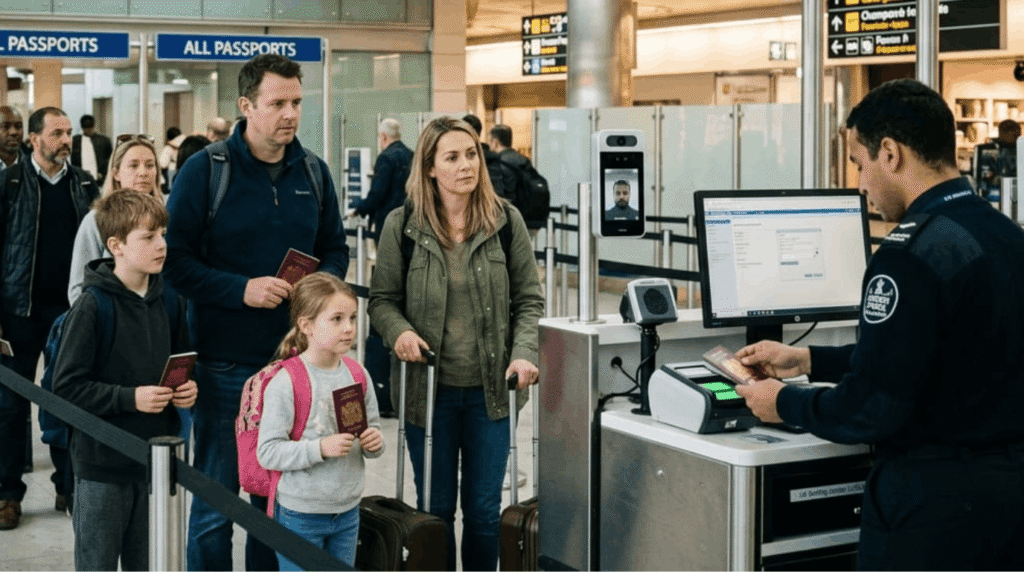
UK passports must be valid for the full duration of your stay. France does not require six months of validity beyond your return date for UK travellers, but many airlines will refuse boarding if your passport expires within three months of your return. Check your specific airline policy before booking flights.
Best Flights from the UK to Paris in 2026
For most UK families, the best value route is London Gatwick to Paris Orly or Paris Charles de Gaulle with easyJet or British Airways. Flying into Orly is often underrated. It sits closer to central Paris by a significant margin, and the tram connection via Orlyval to RER B is clean, fast, and easy to manage with children and luggage. Eurostar remains excellent if you are within reasonable distance of London St Pancras. No airport security theatre, more luggage allowance, and you arrive directly in the centre of Paris. For 2026, book Eurostar at least six weeks ahead to access family fares worth taking.
Paris Transport: Navigo vs. Paris Visite for Families
For families staying five to seven days, the Navigo Decouverte weekly card is almost always better value than the Paris Visite pass. The Navigo costs 30 euros per adult, with children under 11 travelling free, and covers all zones including metro, RER, bus, and suburban train travel without restriction. One important detail: the Navigo week runs Monday to Sunday, not as seven rolling days from your arrival. If you arrive mid-week, you will pay for the full week but only use part of it. Factor this into your arrival day planning.
Paris Museum Pass in 2026: Is It Worth Buying?
The two-day Paris Museum Pass costs 55 euros per adult in 2026. Children under 18 enter most museums for free. The four-day pass costs 70 euros. It covers over 50 sites including the Louvre, Palace of Versailles, Musee d’Orsay, Sainte-Chapelle, and more. For a family doing Versailles and the Louvre alongside two or three additional sites, it pays for itself easily. The pass also allows queue-jump entry at most locations, which in peak summer is worth the cost alone. Buy online before you travel rather than at the site. Kiosks at CDG and Orly airports sell the same pass at a 10 to 15 percent markup.
Booking the Eiffel Tower in 2026
Timed entry is mandatory for the Eiffel Tower and has been for several years. Book through the official website at toureiffel.paris only, not through any third-party reseller. In 2026, slots during July and August typically sell out 60 to 90 days in advance. For spring or autumn travel, three to four weeks ahead should be sufficient for most dates. Evening slots after 6pm are atmospheric, slightly less competitive to book than mid-morning peak times, and genuinely beautiful in summer light. The summit requires a separate ticket purchased in addition to the standard access ticket.
What to Pack for Kids on a Paris Family Holiday
- Walking shoes that are already broken in. Paris averages over 12,000 steps on a serious sightseeing day.
- A light rain layer, even in summer. August storms catch families off guard every year.
- A small day backpack for each child so they carry their own water, snacks, and the museum activity sheet.
- A portable phone charger. Navigation, translation apps, and Google Maps drain battery faster than you expect.
- A physical note of your hotel address and your itinerary. For the moment someone’s phone dies at a metro station.
Section 2: Where to Stay in Paris with Kids
The most expensive arrondissements in Paris, the 1st, 4th, and 8th, are the most convenient and also the most exhausting if you have children in tow. Here is an honest comparison of the areas that actually work for families on a real budget.
The 11th Arrondissement: Bastille and Oberkampf
This is our recommendation for most families visiting Paris. It is genuinely Parisian without being performatively so. Metro connections are excellent across lines 1, 5, 8, and 9. The price difference versus tourist-core arrondissements is significant, and the streets around Rue de la Roquette have good bakeries, relaxed restaurants, and small parks where local families actually spend their evenings.
The 12th Arrondissement: Nation and Gare de Lyon
Underappreciated by most Paris travel guides and consistently cheaper than the 11th. Direct RER A connection to CDG airport and Versailles means less stress on transit days. The Promenade Plantee elevated garden is right here. The Marche d’Aligre is one of the best markets in the city. Large family apartments are easier to find in the 12th than anywhere near the tourist centre.
Apartment vs. Hotel for a Family of Four
For families of four staying a full week, a self-catering apartment wins almost every time. Breakfast at the apartment costs roughly 8 to 10 pounds per morning for four people. A hotel breakfast for the same family runs 50 to 60 pounds. That difference over seven days is several hundred pounds in savings. Laundry facilities matter more than most families anticipate. Look for apartments above the ground floor for light and security, and always read the cancellation policy carefully before booking.
| Accommodation Type | Budget per Night | Mid-Range | Splurge |
|---|---|---|---|
| Budget hotel (double plus adjoining) | £90 to £110 | ||
| Mid-range hotel (family room) | £130 to £180 | ||
| Boutique or 4-star hotel | £200 to £350+ | ||
| Self-catering apartment (2-bed) | £100 to £130 | £140 to £200 | £220 to £400+ |
Section 3: The Full 7-Day Paris Family Itinerary
Each day below is built from genuine experience rather than a template. The times, costs, transport options, and small details, from a specific cafe to a queue-skip approach, are the things that separate a good day from an exhausting one.
Day 1 Arrival and Montmartre Before the Crowds
Getting from the Airport to Your Accommodation
If you are flying into CDG, the RER B train to central Paris costs 11.80 euros per adult with children under 10 travelling free. The journey takes around 35 minutes to Chatelet-Les Halles. For a family of four with luggage, a pre-booked private transfer costs around 65 to 80 euros for the car regardless of family size, and is worth considering if you have young children or a lot of bags. If flying into Orly, the Orlyval shuttle to RER B costs 13.50 euros per adult and is smooth and manageable. A licensed taxi from Orly to central Paris runs a fixed rate of 35 euros to the Left Bank or 44 euros to the Right Bank.
Afternoon: Montmartre the Right Way
After checking in and dropping luggage, head to Montmartre in the early afternoon. By 2pm, the main crowd on the steps to Sacre-Coeur has peaked and begins to thin. Take the funicular up using one metro ticket each and approach the basilica from the back streets rather than the famous front staircase. The interior is free and genuinely impressive. The dome has long queues and a separate charge, so skip it on day one and save the energy for tomorrow.
After the basilica, walk the quieter streets on the northern side of the hill: Rue Lepic, Place du Calvaire, the residential streets where Montmartre still has actual residents. This is the part most families never find.
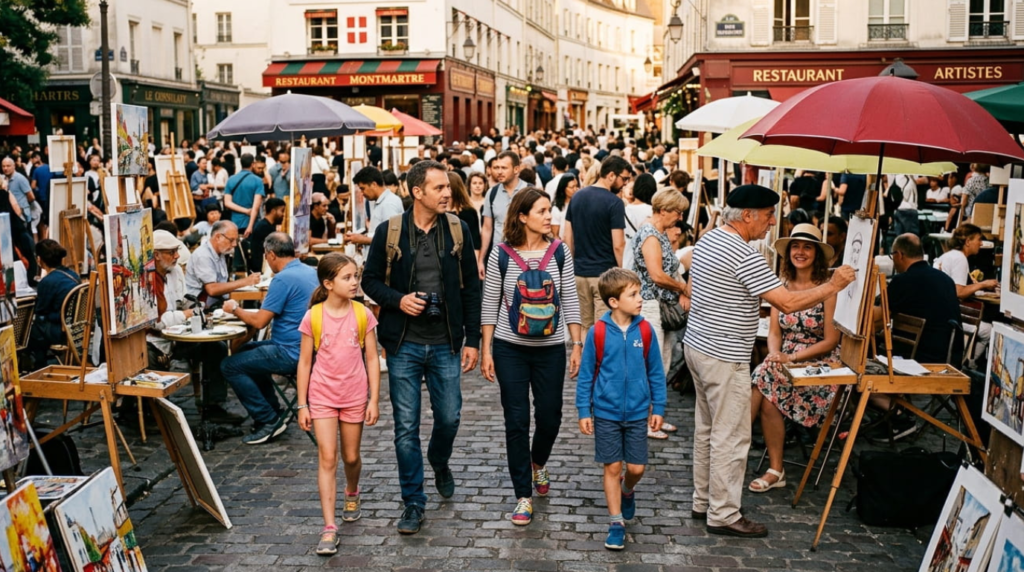
Skip This: Place du Tertre is a heavy tourist trap. Portrait artists here charge 30 to 80 euros per sketch using high-pressure tactics. The crepe sellers charge double what you pay two streets away. Walk through it and enjoy the energy, but do not stop.
Insider Tip: For dinner, walk down to Rue des Abbesses and choose any neighbourhood bistro on the side streets. The rule is simple: if the menu is laminated and printed in four languages, keep walking.
Where We Ate
Le Miroir on Rue des Martyrs. Excellent prix fixe menu, family-friendly atmosphere, honest prices. Book ahead even on weeknights.
Day 2 The Eiffel Tower Done Right
Morning: The Tower at Opening Time
Your pre-booked timed slot should be the first available, ideally at 9am. The first 60 minutes of the day are the calmest, the light is beautiful, and the lift queues inside the tower are a fraction of their midday length. With children, we recommend stopping at the second floor rather than pushing on to the summit. The views are nearly as good, the experience is far less crowded, and you will spend the saved time and energy better elsewhere.
Insider Tip: Bring snacks and a blanket. After the tower, cross to the Champ de Mars and take a proper mid-morning break on the grass. The Franprix supermarket on Rue du Champ de Mars has everything you need at normal city prices.
Afternoon: Rue Cler and the Musee du Quai Branly
Walk northwest to Rue Cler, one of the best market streets in Paris with fromageries, charcuteries, and a brilliant covered fruit section. This is the Paris food experience most families never find. Pick up lunch components and eat in the Square Santiago du Chile, a small park two minutes away. In the afternoon, visit the Musee du Quai Branly-Jacques Chirac. It sits in the shadow of the Eiffel Tower and consistently draws a quarter of the Louvre’s crowd. The collection covers indigenous art and culture from Africa, the Americas, Asia, and Oceania and is genuinely engaging for children aged 7 and above.
Skip This: Skip the tourist boat operators directly under the Eiffel Tower. They charge a location premium for an average experience. Save the Seine river cruise for Day 5.
Day 3 Le Marais and the Real Paris
Morning: Place des Vosges
Paris’s oldest planned square is one of its most beautiful, and at 9am, before the boutiques open and the weekend crowds arrive, it is almost private. The arcaded walkways are free to walk. The symmetrical brick and stone facades have barely changed in four centuries. Victor Hugo’s house sits in the corner and entry is free, with a small charge for temporary exhibitions. Children who have studied French history will find it genuinely compelling.
Midday: The Jewish Quarter
The Marais Jewish Quarter, centred on Rue des Rosiers, is one of the last authentically diverse pockets of inner Paris. L’As du Fallafel at number 34 serves what is, without much argument, the best falafel in Paris. Yes, there is a queue. Yes, it is worth it. Order the special, eat it at the window or on the street, and budget around 8 to 10 euros per person. The queue moves faster than it looks.
Afternoon: Centre Pompidou
The Pompidou is consistently brilliant with children because the building itself is the first exhibit. The exposed pipes, escalators on the outside, and inverted architecture stop kids in their tracks before they have even looked at any art. The children’s atelier, an art workshop, must be booked in advance through centrepompidou.fr and runs for specific age groups. Check the programme before you travel. The permanent modern art collection is included with standard admission, and the top-floor view across Paris rooftops is not to be missed.
Skip This: The souvenir stalls near BHV and the Hotel de Ville metro sell the lowest-quality items at the highest prices in the city. The same magnets and keyrings sold elsewhere in France cost 40 percent more here.
Day 4 Versailles Day Trip
Getting There Without the Tourist Coaches
Take the RER C from central Paris to Versailles-Chateau-Rive Gauche. The station drops you directly at the chateau gates. The journey takes around 35 to 40 minutes from the centre. Do not book a guided tour coach. They leave at fixed times, return at fixed times, and remove all the flexibility that makes Versailles worthwhile, particularly when it comes to spending longer in the gardens, which is where the palace truly rewards you.
Aim to be at the gates by 9:30am. The first wave of coach tourists arrives around 10:30 to 11am. The difference in queue length between those two times is dramatic.
Inside the Palace: What Works for Families
The Hall of Mirrors is non-negotiable and genuinely awe-inspiring, even for children who have heard about it. The King’s Apartments are remarkable but can feel repetitive for younger children after the first few rooms. Follow their lead. The children’s audio guide, available separately, is significantly better at holding younger attention than the adult version.
Insider Tip: Skip the paid audio guide for adults and download the free Versailles app instead. It has better maps, richer information, and costs nothing.
The Gardens and the Grand Canal
The gardens of Versailles are enormous, free to walk on most days, and ideal for a family picnic. Pack lunch from Paris or buy from the cafe near the Grand Canal. Prices at the site are high but not unreasonable given the location. The Grand Canal boat rental at 17 euros per boat for up to four people per hour is one of the most genuinely lovely things to do with children during the entire trip.
| Versailles Item | Approximate Cost |
|---|---|
| RER C return x 4 | ~£22 |
| Palace entry x 2 adults (children free) | ~£36 |
| Lunch, self-catered | ~£18 |
| Grand Canal boat hire, 1 hour | ~£17 |
| Total estimate | ~£93 |
Day 5 Latin Quarter and Seine River Cruise
Morning: Shakespeare and Company and the Pantheon
Begin at Shakespeare and Company, the legendary English-language bookshop on the Left Bank opposite Notre-Dame. It opens at 10am and is more than a shop. It has resident writers, a small upstairs reading room, and someone is usually playing the piano near the entrance. Children who read are often unexpectedly delighted by it. The attached cafe does excellent coffee and a simple but good breakfast menu.
From there, walk five minutes to the Pantheon. This is one of Paris’s most consistently undervisited major monuments, which is precisely what makes it rewarding for families who want room to breathe. Foucault’s Pendulum hangs from the centre of the dome and demonstrates physics in a way that older children find hard to forget. The tombs of Voltaire, Rousseau, Marie Curie, and Victor Hugo are all here. Entry is covered by the Museum Pass.
Afternoon: Seine River Cruise
For a Seine cruise, choose Vedettes du Pont Neuf over the more famous Bateaux Mouches. The boats are smaller, the commentary is less intrusive, and the boarding point at Square du Vert-Galant on the Ile de la Cite is more atmospheric. Adult tickets cost around 15 euros with children at 10 euros and under-4s free. The cruise runs for around 60 to 75 minutes and gives wonderful context to all the landmarks you have been visiting at ground level.
Insider Tip: Book online for a small discount and to guarantee your preferred departure time. The 6pm cruise in summer light is particularly worth choosing.
Evening: Ile Saint-Louis
Walk from the cruise to Ile Saint-Louis, the smaller of Paris’s two central islands and one of the few places in central Paris that feels genuinely quiet in the evening. Berthillon at 31 Rue Saint-Louis en l’Ile has been making ice cream since 1954. The queue is part of the ritual. Get two scoops, walk the perimeter of the island, and take an early night. Day 6 starts with the Louvre and requires a fresh start.
Day 6 The Louvre: The Family Strategy
The Right Entrance for Families in 2026
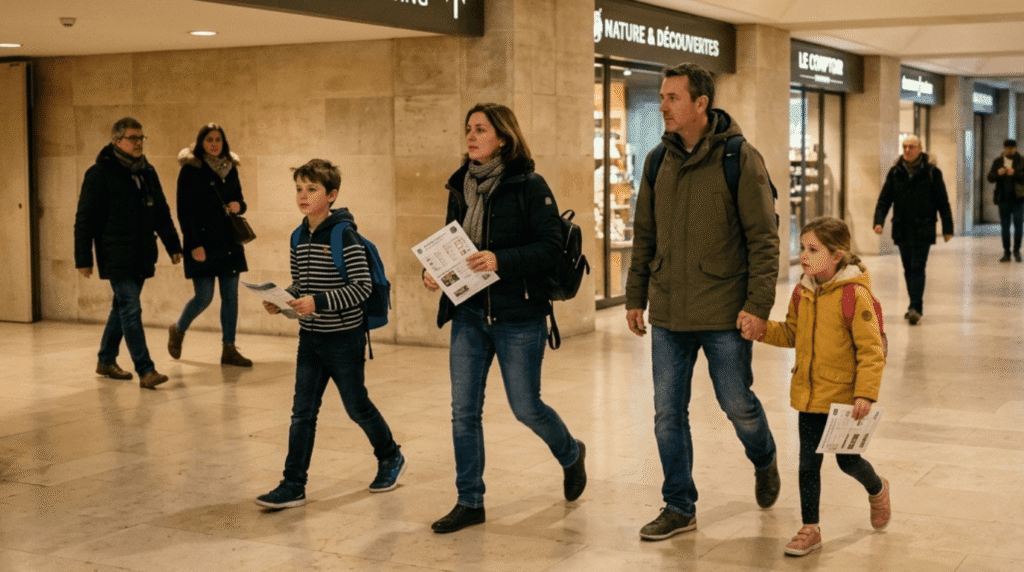
Do not use the glass pyramid entrance. In 2026, the most practical entry for families with Museum Passes is the Richelieu Wing entrance on Rue de Rivoli, accessible through the underground Carrousel du Louvre shopping area. It bypasses the pyramid queues entirely, has better lifts, and drops you into a less crowded section of the museum. Security remains thorough even here so allow 20 minutes for the process.
A Curated 2.5-Hour Family Route
The Louvre contains approximately 35,000 works. Trying to see a meaningful portion of them in a single visit is how children end up sitting on marble floors and refusing to move. Here is the route we walked with an 8-year-old and an 11-year-old that held both their attention throughout.
- Winged Victory of Samothrace at the top of the Daru staircase. The drama of this entrance never fails.
- Venus de Milo in the Sully Wing. Tick the famous pieces quickly and keep moving.
- Egyptian Antiquities: mummies, hieroglyphs, and a complete sphinx. Children are gripped by this section. Allow 45 minutes.
- Dutch Golden Age paintings including Vermeer. Smaller scale and more intimate after the grand set pieces.
- The Mona Lisa via the Salle des Arts. Go directly there. Crowds are heaviest between 11am and 2pm. It is smaller than the internet suggests. See it, appreciate what it represents, and move on without guilt.
After the Louvre: Tuileries Garden
The Tuileries Garden directly outside is perfectly positioned for a post-museum decompression. Children can run. There are paid trampolines, a carousel, and a cafe. It is Parisian parents doing exactly what you are doing, which is more restorative than it sounds.
Insider Tip: Marche Saint-Honore, a five-minute walk from the Tuileries, has excellent lunch options at non-tourist prices. The covered section has a bakery, a cheese counter, and several hot food stalls.
Day 7 Slow Morning and Departure
Canal Saint-Martin
On your last morning, resist the urge to pack in more sightseeing. Take the metro to Republique and walk Canal Saint-Martin instead. This is where young Parisians actually live and spend their Sunday mornings: iron footbridges, tree-lined waterways, independent coffee shops, and almost no tourists. Walk north to the Hospital Saint-Louis, which has one of the most beautiful courtyards in Paris and appears on almost no list.
If the children have any spending money left, the independent shops along the canal around Rue de Lancry are the right place to use it. Real objects, honest prices, nothing mass-produced.
Last Cafe, Last Croissant
Find a cafe with a tabac sign, order a coffee and a fresh orange juice, eat whatever the glass display case has left, and sit with it. Paris is best in the last hour before you leave for the airport, when you have stopped trying to experience it and are simply in it.
Airport Transfer Timing for Families
With children, allow more time than any booking app will suggest. CDG Terminal 2 requires clearing passport control, security, and a long walk to gates. Allow 2.5 hours before your departure time. The RER B from central Paris to CDG takes 35 to 40 minutes but can be delayed: take the train that would arrive 3 hours before your flight. For Orly, the Orlyval tram is reliable and the airport is smaller. Two hours should suffice, though 2.5 is safer when travelling with children.
Section 4: Paris Family Holiday Budget Breakdown 2026
These are our real numbers for a family of four, two adults and two children aged 8 and 11, travelling from London in September 2025. We have added budget and mid-range columns so you can adjust to your own situation. All figures are shown in GBP.
| Category | Budget Option | Mid-Range | Our Actual Spend |
|---|---|---|---|
| Flights, UK return for 4 | £320 | £520 | £480 |
| Accommodation, 7 nights | £630 | £1,050 | £980 |
| Food and drink, all meals daily | £60 per day | £100 per day | £88 per day |
| Transport within Paris | £60 total | £90 total | £72 total |
| Attractions and museum entry | £120 total | £200 total | £185 total |
| Versailles day trip, all costs | £80 total | £120 total | £93 total |
| Extras, souvenirs, incidentals | £50 total | £100 total | £78 total |
| Total | ~£2,960 | ~£4,630 | ~£4,098 |
Where we overspent: museum entry. We had not budgeted for the Versailles children’s audio guide at 6 euros each, the Pompidou children’s atelier at 10 euros per child, or two cafe stops inside the Louvre itself. Add 20 percent on top of whatever you estimate attractions will cost. It is Paris.
Where we underspent: transport. The Navigo weekly card covers everything and we used it without a second thought for every metro, bus, and suburban train journey all week. We did not take a single taxi within the city across seven days.
The biggest single saving came from doing breakfast at the apartment every day. Croissants from a local bakery at 1.40 euros each, orange juice, fruit, and coffee from the supermarket costs around 12 to 15 euros for four people per morning. A hotel breakfast for the same four would have cost 50 to 60 euros. Over seven days, that is a saving of close to 300 pounds.
Section 5: 10 Paris Hidden Gems Most Family Travel Guides Skip
1. Promenade Plantee (Coulee Verte)
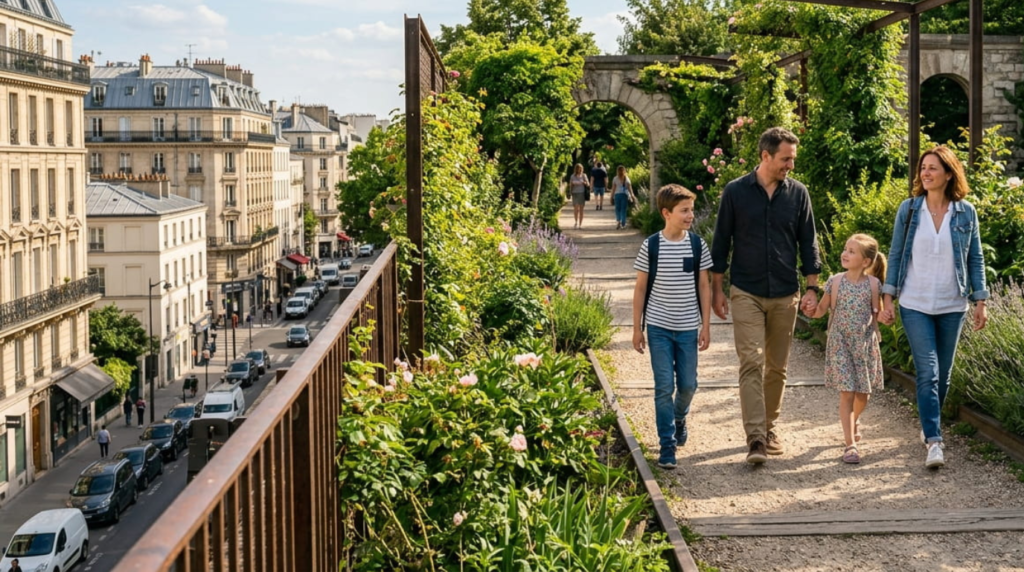
Built on a disused railway viaduct years before New York’s High Line existed, the Promenade Plantee runs for 4.7 kilometres through the 12th arrondissement at treetop level. Rose gardens, lavender borders, and almost no tourists. Children love the elevated perspective and the metal bridges. Start at the Viaduc des Arts on Avenue Daumesnil.
2. Musee de la Chasse et de la Nature
This museum in the Marais is strange, beautiful, and almost always empty. It occupies a 17th-century hotel particulier and houses taxidermy, hunting trophies, and fine art in a deliberate conversation about humanity’s relationship with animals. Children find it fascinating and unsettling in equal measure. Entry is free for under-18s. The building alone justifies the visit.
3. Sainte-Chapelle
On the Ile de la Cite and minutes from Notre-Dame, Sainte-Chapelle has 15 floor-to-ceiling Gothic stained-glass windows that surround you in colour on a sunny afternoon. Most visitors walk to Notre-Dame and miss this entirely. The queues are a fraction of the length. Covered by Museum Pass. It is one of the most extraordinary interior spaces in Europe.
4. The Covered Passages
Paris has around 20 surviving 19th-century covered arcades: Galerie Vivienne, Passage des Panoramas, Passage Jouffroy, and more. They are free to walk, protected from rain, lined with antique bookshops and small cafes, and almost entirely off the standard tourist circuit. Passage Jouffroy has a wax museum at one end that younger children enjoy and an excellent chocolatier at the other.
5. Square du Vert-Galant
The very tip of the Ile de la Cite drops to river level beneath the Pont Neuf and forms a small triangular park. Locals come here with wine and folding chairs to watch the Seine and talk. There are no souvenir sellers, no facilities, and no noise. At sunset it is the most peaceful 20 minutes you will spend in central Paris.
6. Marche d’Aligre
Open every morning except Monday, this covered market in the 12th is where Parisians actually shop. The outdoor section is lively and cheap: vegetables, secondhand clothes, noise. The covered Beauvau market inside has excellent charcuterie, cheese, and bread. It closes around 1pm. Go hungry, buy lunch, and eat on the steps of the old market building.
7. Palais Royal Gardens
Directly behind the Louvre, these formal gardens are free, central, and genuinely peaceful. The colonnaded arcades house independent shops and quiet cafes without tourist pricing. Daniel Buren’s striped columns in the central courtyard are a public installation that children invariably start jumping between. On a warm afternoon, this is the best free hour in central Paris.
8. Musee du Quai Branly Rooftop
We mention this museum in the Day 2 section of the itinerary, but the rooftop bar specifically deserves its own entry. Les Ombres sits above the Trocadero gardens with a direct view of the Eiffel Tower. A glass of wine or fresh juice here at 5pm, watching the tower catch the evening light, costs the same as a similar drink at any nearby cafe but the view is in a different category entirely.
9. Boulangerie Queues Before 9am
This is not a specific location but a practice. Find any bakery with a queue out the door before 9am and join it. You will almost certainly be the only tourists present. A croissant made that morning costs around 1.40 euros. It will be the most authentically Parisian experience of your entire trip, and it costs less than a pound.
10. Canal Saint-Martin on a Sunday Morning
Included in Day 7 of this Paris family itinerary but worth naming here separately. Before midday on a Sunday, Canal Saint-Martin belongs to dog walkers, bakers, and local families having breakfast by the water. Someone is invariably playing guitar on a bridge. It has been gentrified but not destroyed. It is still, recognisably and genuinely, Paris.
Section 6: Paris Tourist Traps to Avoid in 2026
Any Restaurant Within 200 Metres of the Eiffel Tower
This is not an exaggeration. The restaurants immediately surrounding the Eiffel Tower charge a location premium of 40 to 60 percent above normal Paris prices for food that is, at best, average. Walk four blocks in any direction and both the price and the quality change immediately. The Rue Cler market street, a 10-minute walk away, has everything you need for a far better picnic or sit-down meal.
The Moulin Rouge as a Family Activity
The Moulin Rouge is an adult cabaret show starting at 9pm and running past midnight. Tickets cost 120 to 200 euros per adult and no children are admitted. This information appears to surprise a notable number of families every week. The exterior is worth seeing during daylight hours at no cost and makes for a good photograph. Everything beyond that is not a family activity.
Bateaux Mouches Evening Dinner Cruises
A Bateaux Mouches dinner cruise costs 130 to 180 euros per adult for a fixed menu that does not justify the price. The Seine at night is genuinely beautiful, but you can achieve most of that experience on the much cheaper Vedettes du Pont Neuf daytime cruise or simply by sitting on the riverbank with a supermarket picnic. Save the dinner-cruise budget for a properly good Parisian restaurant instead.
Paris Museum Pass from Airport Kiosks
The Museum Pass is excellent value but the kiosks at CDG and Orly charge 10 to 15 percent above the standard price. Buy it online at parismuseepass.com before you travel. Same pass, same access, lower price, and no purchase queue at each monument.
Free Walking Tours That Are Not Actually Free
The pay-what-you-wish walking tours near the Louvre and Notre-Dame operate on a tip model that guides are trained to frame as 15 to 20 euros per person at the end of a two-hour tour. For a similar or smaller budget, you can use the Rick Steves Audio Europe app, which is free, thorough, and goes at whatever pace your children need.
The Batobus River Shuttle
Marketed as a scenic way to move between Paris attractions along the Seine, the Batobus runs on fixed routes, stops infrequently, costs 23 euros per adult for a day pass, and is almost always slower than the metro for actual transport between sites. The one-off Seine river cruise recommended in Day 5 is a far better use of the same money.
Section 7: Paris Family Holiday FAQ
Is Paris safe for families travelling with children in 2026?
Yes. Paris is a major European city with the considerations that come with that. Pickpocketing around the Eiffel Tower and on the RER B is the main risk for families, and the mitigation is straightforward: money belts, bags with zipped closures, and awareness in crowded tourist areas. The city itself, its streets, parks, restaurants, and metro, is welcoming to families with children. Parisians are, in practice, warmer toward children in restaurants and public spaces than many British families expect.
Do UK children need ETIAS to visit France?
Children under 18 need ETIAS authorisation but are currently exempt from the 7-euro fee. The application is free for minors. Each child still requires their own authorisation linked to their own passport. Apply at etias.com. Processing is typically near-instant but can take up to 72 hours in rare cases. Apply before booking anything else.
What is the best age for children to visit Paris?
There is no wrong age, but 7 to 14 is particularly rich. Children this age can walk meaningfully, engage with history and art at a genuine level, handle the Louvre without a meltdown, and remember the trip clearly. Younger children will love Paris for its sensory qualities: food, the river, the parks. Teenagers who have studied French history will find the city almost shockingly vivid in person.
How many days is enough for a family trip to Paris?
Five days is the minimum for a meaningful family visit that includes Versailles and the main monuments without feeling rushed. Seven days, as in this Paris family itinerary, allows a slower pace, one proper rest afternoon, and the chance to discover things that appear on no list. Ten days makes space for day trips to the Loire Valley or Champagne, both worth considering for the right family.
Do Paris restaurants welcome children?
More than their reputation suggests. French families eat in restaurants with children as a normal practice, and most traditional brasseries and bistros are entirely comfortable with it. The Parisian expectation is that children will be seated and reasonably calm, not running or shouting. If yours meet that bar, even imperfectly, you will encounter very few problems. High chairs are less commonly provided than in the UK. Ask for une chaise haute if you need one.
What is the best way to travel from CDG to Paris with children and luggage?
For most families, the choice is between the RER B train at 11.80 euros per adult with under-10s free, taking 35 minutes, and a pre-booked private transfer at 65 to 80 euros for the car regardless of family size and door to door. The RER is excellent if your children are mobile and your luggage is manageable. The private transfer earns its cost with young children, a lot of bags, or a very late arrival. Never take an unlicensed taxi from outside the terminal. Use only the official rank or a pre-booked service.
What French phrases should children learn before a Paris trip?
A small number of phrases make an enormous difference to how Paris receives you. Bonjour, said every time you enter a shop or speak to someone. Merci. S’il vous plait. L’addition, s’il vous plait for the bill. Parlez-vous anglais for when you need help in English. Un croissant, s’il vous plait. Children who attempt French, however imperfectly, are met with warmth. Make it a family game in the weeks before you travel.
Final Thoughts: Why Paris with Kids Is Worth Every Complicated Bit
Paris will not always cooperate. There will be a queue nobody accounted for, a child who refuses to walk another step, a restaurant that turns out to be closed on Tuesdays despite the sign in the window. These are not failures of planning. They are what it feels like to actually be somewhere rather than scrolling through it.
What we remember from our week is not just the Eiffel Tower at 9am, though that was beautiful. It is our youngest reading French words out loud from shop signs, surprising herself. It is the canal at 8am when Paris belonged to dog walkers and bakers. It is the moment in the Pantheon when the Foucault Pendulum completed another slow arc and our eldest went very quiet, understanding something about physics and time and the size of the world.
Paris does this. It gives children a frame of reference for everything that comes after: for history, for art, for the idea that cities can be old and dense and human and extraordinary all at once. Take them while they are young enough to be genuinely astonished.
We hope this guide saves you money, time, and at least three unnecessary queues. Bookmark it, save the budget table, and if anything worked differently for your family or something has changed since we visited, leave a comment below. We read and reply to every one.