
Introduction
Sarah had saved for two years for her dream trip to Paris. Exhausted but excited after her long flight, she stepped out of Charles de Gaulle Airport and accepted a ride from a friendly driver holding a sign with her name. Thirty minutes later, the “shortcut” turned into a nightmare: an inflated fare, a detour through unfamiliar streets, and her luggage mysteriously “misplaced” until she paid extra. She lost €400 that she could never recover.
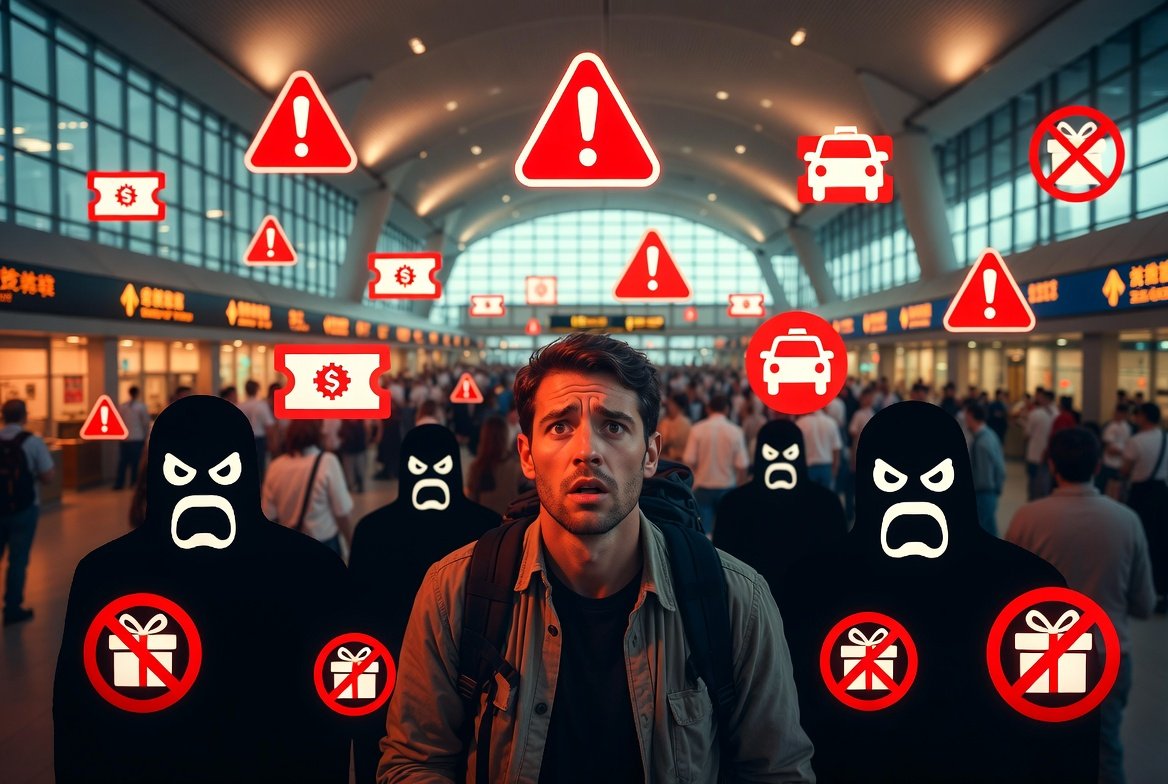
Stories like Sarah’s are painfully common. In 2026, global travel has fully rebounded, with millions of tourists exploring new destinations. Unfortunately, scammers have also evolved. What used to be simple overcharging tactics now includes sophisticated AI-powered schemes like deepfake video calls and cloned booking websites.
Travel Scam Awareness has never been more critical. Post-pandemic travelers digital nomads, families, and solo adventurers alike are often jet-lagged, distracted by new environments, and overly trusting after months of planning. Scammers exploit this vulnerability with tactics ranging from old-school street cons to high-tech digital traps.
Airport & Transportation Scams

Happy tourist family taking a selfie at a famous landmark. Right side shows the same scene but with pickpockets, fake tour guides, and scam artists subtly approaching.
1. Fake Taxi & Ride-Share Scams
How it works + real examples Tired travelers exit arrivals and are approached by individuals claiming to be official drivers. They may hold printed signs with your name (obtained from flight manifests) or offer “cheap” rides. Once inside, the meter is “broken,” the route is extended, or you’re taken to a remote area. In extreme cases, accomplices rob you en route.
Red flags
- Drivers approaching you inside the terminal or before official taxi ranks.
- No official markings, meter issues, or insistence on cash only.
- Prices quoted far above standard rates.
How to avoid Pre-book transfers through your hotel or reputable apps like Uber (where available and verified). Use official airport taxi stands or fixed-price services. Always confirm the driver’s credentials and take a photo of the license plate
2. Baggage & Luggage Scams
Scammers in official-looking vests offer to “help” with your bags at baggage claim, then demand exorbitant tips or disappear with items. Another variant involves stealing luggage tags to file fake claims later. Always keep your bags in sight and handle them yourself.
3. Overpriced Airport Transfers & Shuttle Scams
Minibus operators promise cheap group transfers but detour to collect “commissions” from shops or charge hidden fees upon arrival. Book directly with licensed companies and confirm inclusions in writing.
Accommodation & Booking Scams
4. Fake Rental & Hotel Booking Scams (Airbnb, Booking.com clones)
Scammers create near-perfect replica websites or listings with stolen photos. You pay in full, only to arrive and find no reservation exists. AI tools make these sites increasingly convincing in 2026.
Solution: Book only through official apps/websites. Verify URLs carefully and use credit cards for chargeback protection. Contact the property directly using details from the official site.
5. “Your Room Has Been Upgraded” – Room Switching Scams
Upon arrival, staff (or imposters) inform you of an upgrade, move you to a substandard property, and pocket the difference. Insist on seeing the room before handing over payment or documents
Street & Attraction Scams
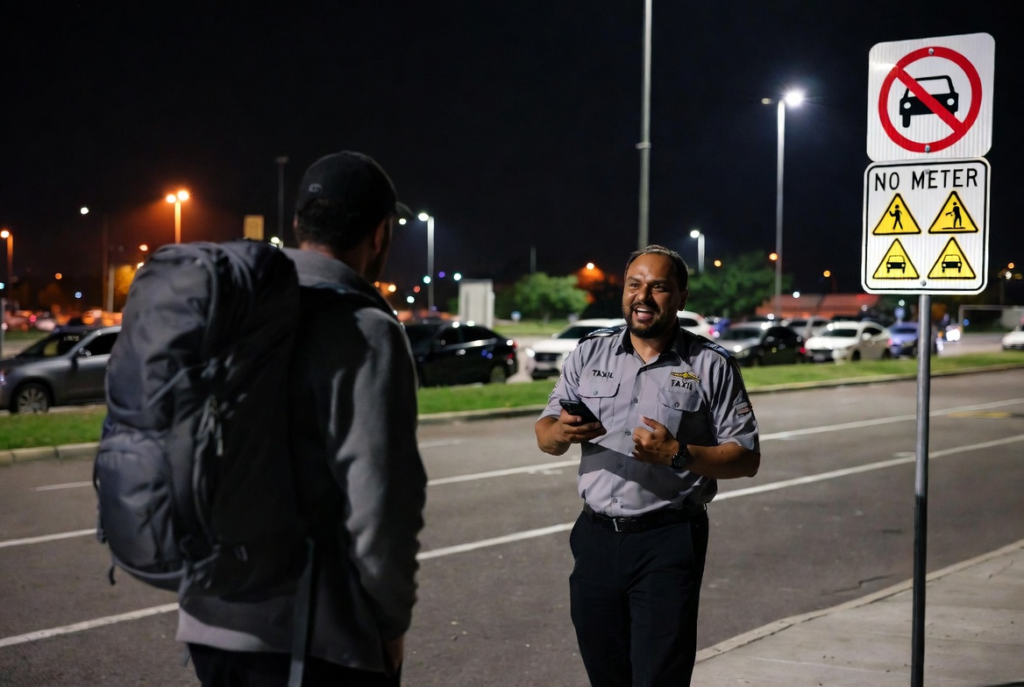
Realistic photo of a tourist being approached by an unofficial taxi driver at an airport arrivals area at night. The driver looks overly friendly while the tourist looks uncertain.
6. Friendship Bracelet / “Gift” Scams
A friendly local ties a bracelet on your wrist as a “free gift” then demands payment. Refuse politely and walk away immediately.
7. Pickpocketing & Distraction Techniques (including children gangs)
Groups, often involving children, create distractions (spilled items, petitions, or crowds) while others steal wallets or phones. Common in busy European cities like Paris and Rome.
8. Fake “Free” Tours & Commission Scams
“Free” walking tours end with high-pressure sales for tips or lead you to overpriced shops where guides earn commissions.
9. Photo Scams & “Helpful” Locals at Landmarks
Someone offers to take your photo, then demands money or leads you to a “special viewpoint” with hidden fees.
Digital & Emerging Scams (2025-2026)
10. Fake WiFi & Public Charging Station Scams
Bogus free WiFi networks capture your data. Malicious charging stations can install malware or drain devices.
11. Romance Scams & “Local Friend” Scams
A charming local (or online match) builds rapport quickly and requests money for “emergencies” or joint adventures.
12. Deepfake Video Call Scams (emergency money requests)
AI voice clones or deepfakes impersonate family members or travel companions in distress, demanding urgent wire transfers.
13. Phishing via Travel Apps & Fake Check-in Links
Fake emails or messages with urgent links lead to credential theft. Always access accounts directly through official apps.
Money & Shopping Scams
14. Currency Exchange Scams & Black Market Deals
Street exchangers short-change you or use sleight-of-hand tricks. Use official exchanges or ATMs.
15. Overpriced Souvenirs & “Special Discount” Pressure Tactics
High-pressure sales with claims of “today only” deals. Research prices beforehand and negotiate calmly.
16. ATM Skimming & Card Cloning
Devices over card slots or fake keypads steal data. Use ATMs inside banks and cover the keypad when entering your PIN.
How to Build Strong Travel Scam Awareness
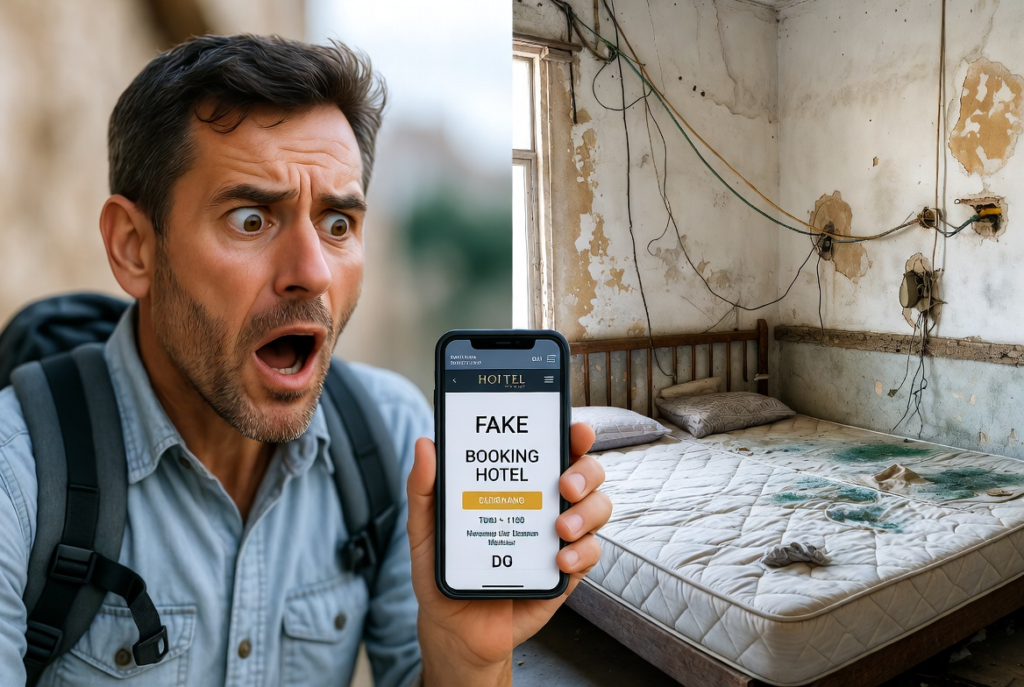
A tourist checking into a beautiful hotel only to discover it’s not the one they booked. Show shocked expression, fake booking confirmation on phone vs real rundown room.
Practical Prevention Checklist
- Research before you go: Search “[destination] common scams 2026”.
- Use official apps and sites: Avoid third-party links.
- Secure your documents & money: Use money belts, RFID blockers, and digital copies.
- Trust your instincts: If something feels off, it probably is.
- Travel insurance that covers theft/scams: Choose comprehensive policies.
Essential Apps & Tools for Safe Travel (2026)
- VPNs (e.g., ExpressVPN) for public WiFi
- Authenticator apps for 2FA
- Offline maps and translation tools
- Real-time price comparison apps
- Emergency contact and tracking apps
Conclusion
The best defense against travel scams is awareness. By staying vigilant, using official channels, and trusting your gut, you can greatly reduce your risk. Scammers thrive on distraction and urgency slow down and verify.
FAQ
What is the most common travel scam in Europe?
Pickpocketing and distraction scams in major cities like Paris, Rome, and Barcelona, along with taxi overcharging.
How do I report a travel scam?
Contact local police, your credit card company, and your country’s embassy. In the US, report to the FTC; in the EU, use local consumer protection agencies.
Are fake booking sites still a big problem in 2026?
Yes AI has made them more convincing. Always book directly through official platforms