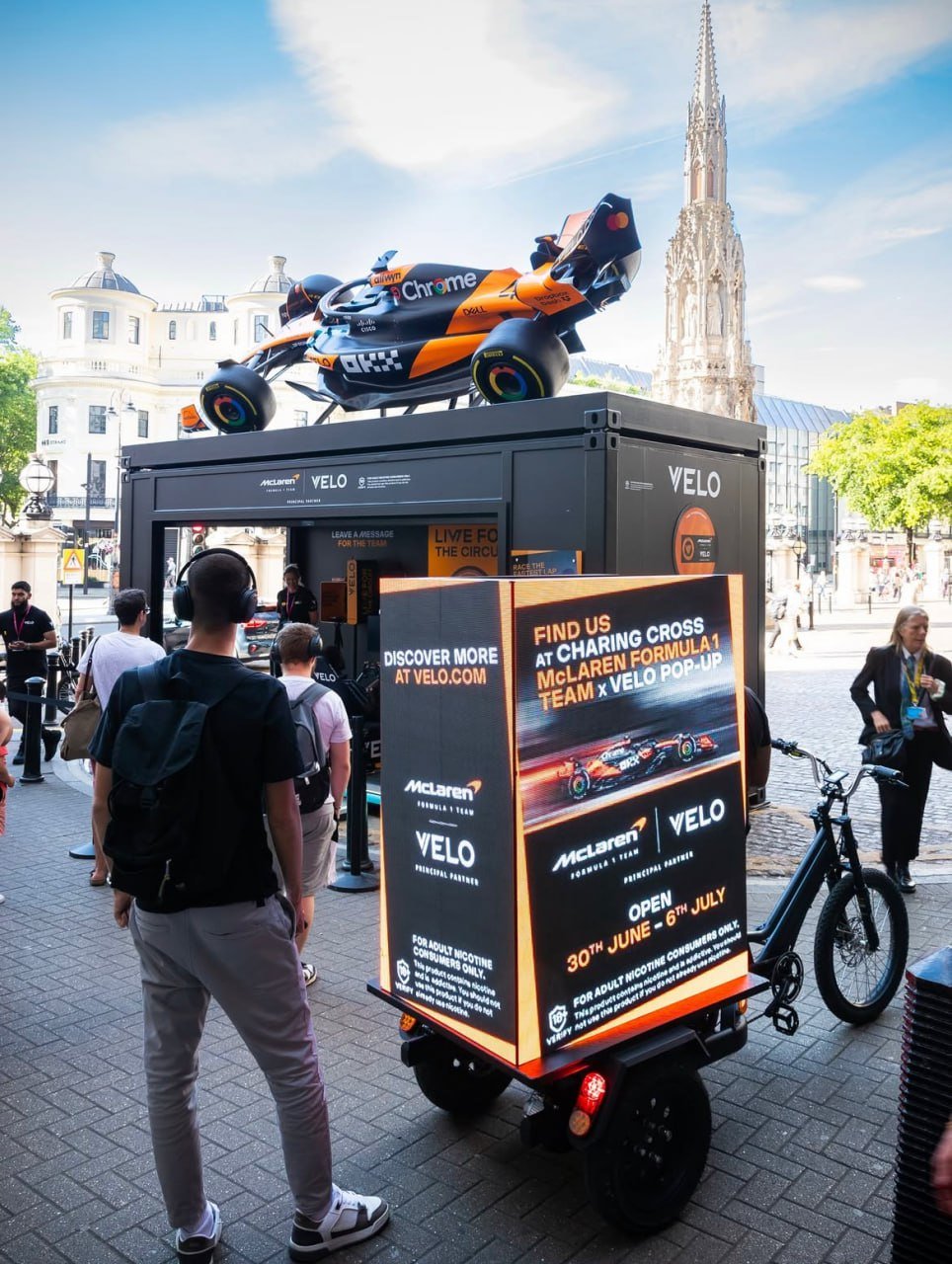
Walk through any major UK city in 2026 and you will spot something new weaving between pedestrians and traffic: a bicycle carrying three high-definition LED screens, silently rolling through the streets and turning heads as it goes.
These are Digital AdBikes. Purpose-built advertising bicycles fitted with three-sided LED displays, designed and manufactured in the UK by Mobile Billboards. They are zero-emission, completely silent, and capable of going places that traditional outdoor advertising cannot reach: pedestrianised high streets, festival grounds, university campuses, and busy city centre lanes where motor vehicles are banned.
They are changing how brands connect with urban audiences, and they are doing it without burning a drop of fuel.
Why Bike Billboards, Not Traditional Billboards?
Cities are getting tighter. Pedestrianised zones are expanding. Clean air zones are pushing diesel vehicles out of town centres. Councils across the UK are restricting motor traffic on high streets that were once open roads.
For advertisers, this creates a problem. Traditional billboard sites are fixed in location. Advertising vans can cover ground but they cannot enter pedestrian areas, cycle lanes, or event spaces. The places where people actually gather, shop, eat, and socialise are increasingly off-limits to conventional advertising formats.
Digital AdBikes fill that gap. A rider can cycle directly through a Saturday afternoon shopping crowd in Manchester’s Exchange Square, loop past the bars and restaurants on Leeds’ Call Lane, or cruise the South Bank in London during a weekend market. The advertising goes exactly where the audience is, not where a billboard site happens to be.
And because they are bicycles, not motor vehicles, they do not need road permits in most pedestrianised areas. They can operate where nothing else can.
Three Screens, Every Angle
What makes the Digital AdBike different from a standard promotional bicycle is the screen setup. Three LED panels are mounted on a custom frame behind the rider, angled to create a triangular display visible from the front, left, and right. There is no blind spot. Whether someone is walking toward the bike, alongside it, or watching it pass, they see the full creative.
The screens are high-brightness LED, built to be visible in direct sunlight. They display full-motion video, animation, and dynamic content. Creative can be updated remotely and scheduled to change throughout the day, so a morning coffee brand gives way to a lunchtime retail promotion, then shifts to an evening event listing.
Each bike also carries GPS tracking, logging the exact route, stops, and dwell times. Clients receive proof of execution reports showing precisely where and when their content was displayed across the city.
Zero Emissions, Zero Noise
The environmental angle is not a marketing add-on. It is core to how Digital AdBikes are built.
Every bike in the fleet is human-powered. No motor, no battery assist for propulsion, no emissions. The LED screens run on a lightweight rechargeable battery that lasts a full day of operation. At the end of a campaign day, the bike has produced zero carbon emissions and zero noise pollution.
This matters in 2026 more than ever. Brands are under pressure to demonstrate sustainability across every part of their marketing. Consumers notice, and councils notice. Running a diesel van through a city centre to display advertising is increasingly difficult to justify when a zero-emission alternative exists.
Several UK councils have actively welcomed Digital AdBikes in areas where they have restricted or banned other forms of mobile advertising. The bikes align with clean air policies, active travel strategies, and the general push toward greener urban environments.
Built in the UK, First in the World
Mobile Billboards designed and built the Digital AdBike in-house. There was no template to follow. Three-sided digital LED screens mounted on a bicycle did not exist before this. The engineering challenge was significant: the screens needed to be bright enough for outdoor use, light enough for a rider to cycle comfortably all day, and robust enough to withstand British weather and city streets.
The result is a format that has been used by brands including Nike, McLaren, Formula 1, and Amazon for campaigns across London, Manchester, Birmingham, Leeds, and beyond. The bikes have appeared at major events, product launches, and retail activations where high footfall and visual impact matter.
Now, the format is being taken international. Mobile Billboards has been invited to bring Digital AdBikes to the US market, where nothing comparable currently exists. The same zero-emission, three-screen format that works on Oxford Street will soon be rolling through American cities.
How Brands Are Using Them
The flexibility of the AdBike format has opened up campaign types that would not work with fixed billboards or even advertising vans:
Event perimeters. Brands run AdBikes around festival entrances, conference venues, and stadium approaches, catching audiences during the high-attention moments of arrival and departure.
Hyper-local targeting. A campaign can focus on a single postcode, a specific high street, or a two-mile radius around a store opening. The bike goes exactly where the brief says.
Multi-city tours. The bikes are compact and transportable. A brand can run a coordinated campaign hitting London on Monday, Manchester on Wednesday, and Birmingham on Friday with the same creative.
Guerrilla and launch activations. The visual impact of a glowing LED bike rolling through a busy street creates organic social media content. People photograph and film them, extending campaign reach beyond the physical route.
What Comes Next
Digital AdBikes are part of a broader shift in outdoor advertising toward formats that are mobile, measurable, and sustainable. As cities continue to restrict motor traffic and expand pedestrian spaces, the advertising formats that thrive will be the ones that move with the city rather than fighting against its direction.
For brands looking to reach urban audiences in spaces that traditional OOH cannot access, the most interesting development in outdoor advertising is not bigger screens or taller billboards. It is a bicycle with three LED panels, ridden by a human, producing zero emissions, going exactly where the people are.