

Planning a trip is exciting, but rigid itineraries often lead to stress and burnout. Whether you have only a long weekend or two full weeks, learning how to customize any travel itinerary lets you create a journey that perfectly matches your time, energy, and interests. In this guide, you’ll discover practical, easy-to-apply tips to adapt any pre-made itinerary without missing the best parts of your destination.
Understand Your Available Time and Priorities
Before touching any itinerary, you must get clear on your own constraints and desires.
- Determine exact travel dates and free hours per day — Be realistic about arrival/departure times, jet lag, and work calls you can’t avoid.
- Define your top 3–5 must-do activities — These are the non-negotiable experiences you’ll regret missing.
- Consider travel style (relaxed, adventure-packed, family-friendly, cultural deep-dive, food-focused, etc.).
Knowing your priorities first prevents you from trying to “do it all” and ending up exhausted
Break Down the Original Itinerary
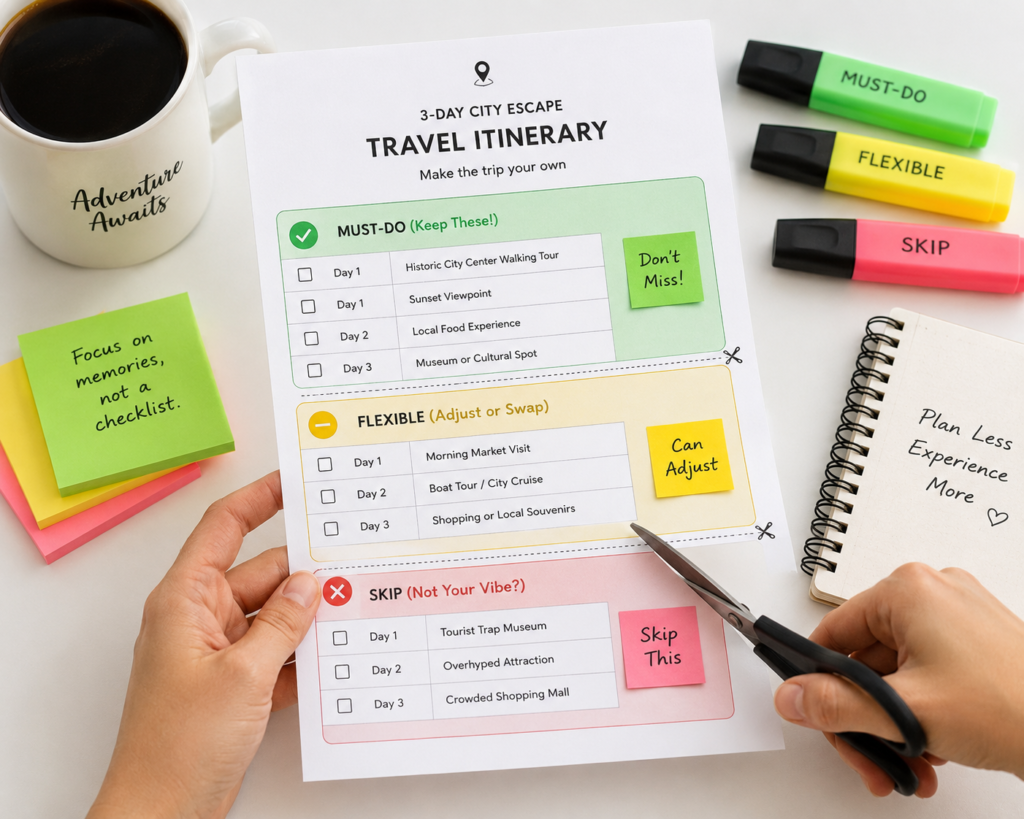
Once you have a base itinerary (from a blog, tour company, or Pinterest), it’s time to dissect it.
Key Tips:
- Separate activities into three categories: Must-See, Nice-to-Have, and Skip.
- Map out daily time blocks (morning, afternoon, evening) to see how the schedule actually flows.
- Identify overlapping or back-to-back activities that will cause rushing and fatigue.
This simple sorting exercise usually reveals that 20-30% of the original plan can be removed or adjusted without losing the trip’s essence.
Adjust for Your Pace and Energy Levels
For tight schedules (3–5 days) Focus on 1–2 cities or areas maximum. Choose a central location and do day trips instead of changing hotels. Prioritize the absolute highlights and remove long transfers.
For medium trips (7–10 days) You can comfortably cover 2–3 destinations. Alternate high-energy and low-energy days. Keep 1–2 flexible days in the middle.
For longer flexible journeys (10+ days) Add depth instead of breadth. Spend more time in each place, include rest days, and allow spontaneous side trips.
Practical Advice:
- Replace intense multi-city hops with deeper exploration of fewer places.
- Swap high-energy activities for relaxed ones when needed (e.g., replace a full-day hiking tour with a scenic cable car ride + café hopping).
- Add or remove travel days based on your actual flight schedule.
Use Smart Tools to Customize Efficiently
Modern tools make customization fast and visual:
- Google Sheets or Excel templates for custom itineraries (easy to drag and drop days).
- Apps like TripIt, Wanderlog, or Google My Maps — Wanderlog is especially good for visual daily planning.
- Booking platforms with flexible cancellation policies (Booking.com, Viator, GetYourGuide) so you can adjust as you go.
These tools let you see your customized itinerary on mobile and make real-time changes during the trip.
Incorporate Buffer Time and Contingency Plans
The biggest mistake most travelers make is packing the schedule too tightly.
Important Tips:
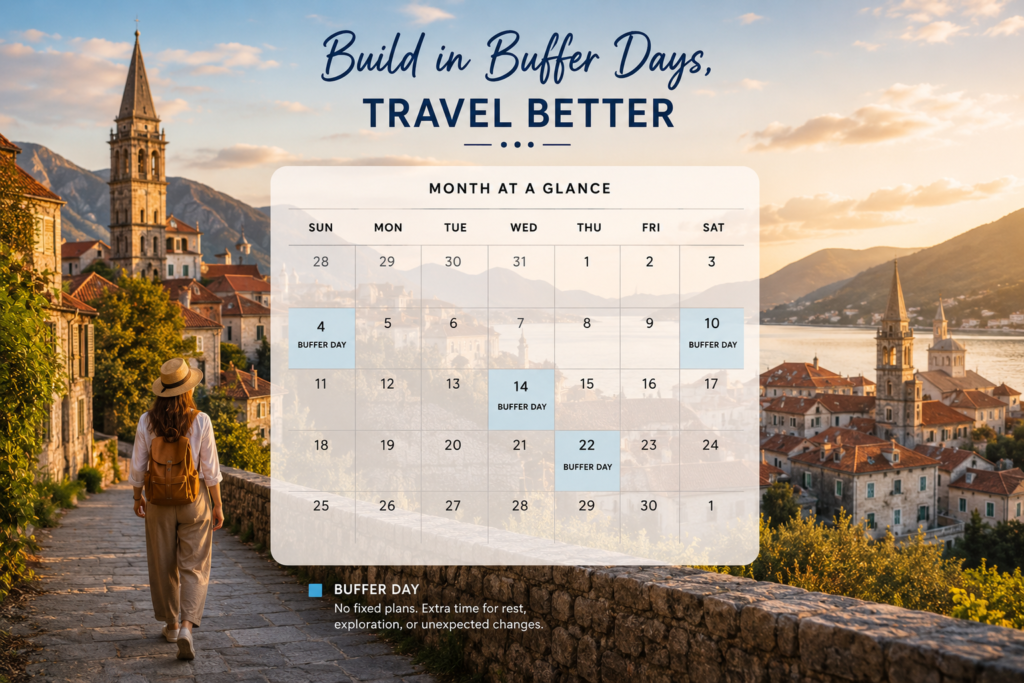
- Build in 1–2 completely flexible “free” days.
- Add buffer between activities (at least 30–60 minutes for transport and meals).
- Research backup indoor activities for bad weather or low-energy days.
Buffer time is what turns a good trip into a great, stress-free one.
Customize by Travel Companion and Budget
Tailor the same base itinerary for different needs:
- Solo travelers — More freedom for spontaneous changes and self-paced exploration.
- Couples — Balance sightseeing with romantic dinners and couple-friendly activities.
- Families with kids — Include shorter activity blocks, playgrounds, and kid-oriented attractions. Add downtime for naps.
- Budget vs. luxury travelers — Swap accommodations, tours, and restaurants while keeping the core experiences.
The activities can stay similar, but the execution changes dramatically based on who you’re traveling with and how much you want to spend
Final Review Checklist
Before finalizing your customized itinerary, run through this quick checklist:
- Do the total days match my actual schedule?
- Are transportation connections realistic and not too tiring?
- Have I balanced activities and rest days?
- Is there flexibility for spontaneous adventures?
- Does the pace match my (and my companions’) energy level?
- Have I included buffer time and contingency options?
Conclusion
Customizing any travel itinerary doesn’t have to be complicated. By following these easy tips on how to customize any travel itinerary, you can transform a generic plan into your perfect personalized adventure. The key is starting with your own schedule and priorities instead of forcing yourself to follow someone else’s rhythm.
Ready to create your own? Download a free customizable itinerary template [Link Placeholder] and start planning your next trip today!
Have you ever completely changed a travel itinerary to fit your schedule? Share your best customization tips in the comments below!
Frequently Asked Questions
1. How long does it take to customize a travel itinerary?
Most people can customize a ready-made itinerary in 1–3 hours. Spend 30 minutes reviewing your schedule and priorities, another 30–60 minutes breaking down the original plan, and the rest adjusting days and activities. The more you practice, the faster it gets.
2. Can I customize itineraries from group tours or package holidays?
Yes! Even if you booked a package, you can customize it by skipping optional tours, swapping activities, or requesting changes with the operator. Many companies allow modifications before the trip starts. For fully independent customization, use the base structure but build your own daily plan.
3. What should I do if my flight times change after planning?
Always keep your itinerary flexible. Use apps like Wanderlog or TripIt that automatically update when you forward your booking confirmations. Build in buffer days and avoid booking non-refundable activities on arrival and departure days.
4. How do I balance must-see attractions with rest time?
Follow the 60/40 rule: Fill 60% of your days with planned activities and leave 40% as flexible or rest time. Prioritize your top 3–5 must-dos and treat everything else as optional. It’s better to fully enjoy fewer places than rush through many.