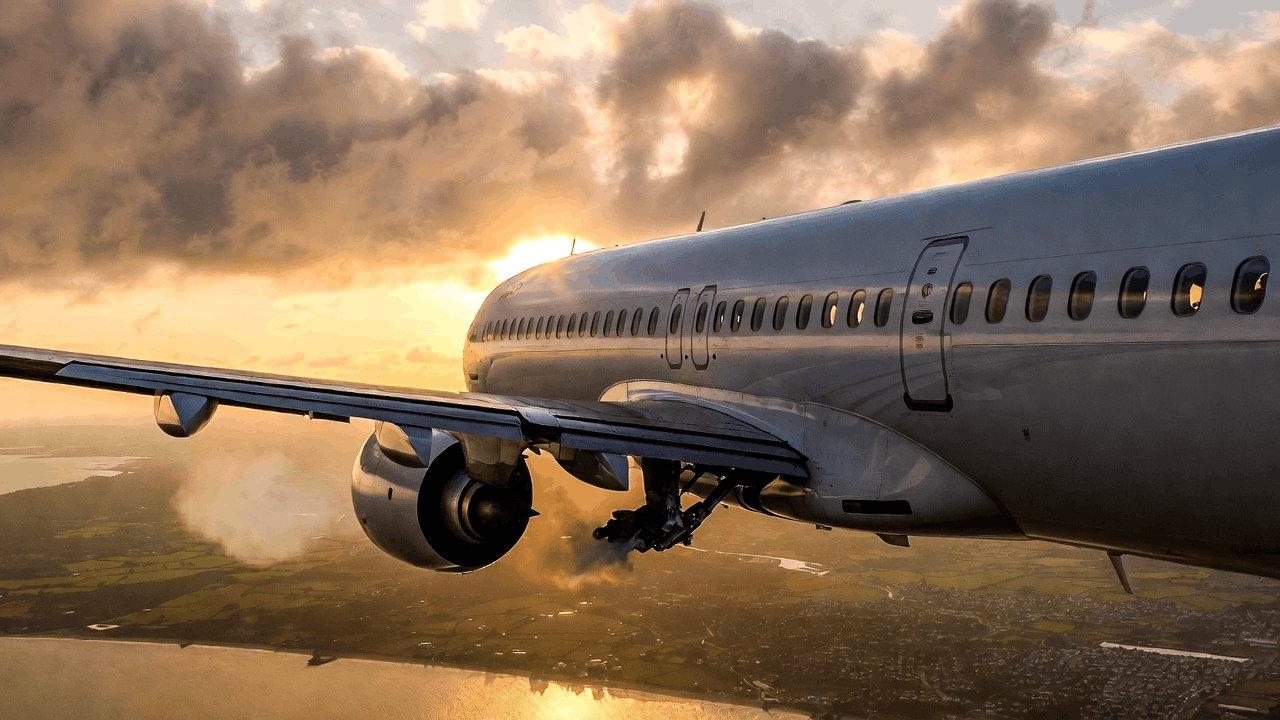
Imagine this: You’re 30 seconds into your dream holiday flight. The seatbelt sign has just gone off. Then, a loud rumble shakes the left side of the plane. A burning smell fills the cabin. The captain comes on and says the words no one wants to hear: “We have an engine failure. We are declaring an emergency.”
That exact scenario happened on TUI flight BY6754 on 28 September 2025.
In this article, you’ll relive the full story minute-by-minute through real passenger accounts, see exactly what the crew did, and, most importantly, walk away with 7 practical lessons that could save your peace of mind (or more) on any future flight.
No matter if you’re uneasy about flying or traveling often, here’s an in-depth look at one of 2025’s most widely discussed aviation events, along with a clear explanation of what an “emergency landing” truly signifies in 2026.
What Happened on TUI Flight BY6754: Full Timeline
Flight details
- Aircraft: Boeing 737-8K5 (G-TAWY)
- Route: Cardiff (CWL) → Paphos, Cyprus (PFO)
- Date: Sunday 28 September 2025
- Take-off: 16:28 local time
Here’s the exact timeline of events, based on FlightRadar24 data, passenger reports, and TUI’s official statement:
| Time (approx.) | Event | What Passengers Experienced | Crew Action |
| 16:28 | Take-off from Cardiff | Normal excitement | Standard climb |
| 16:30 | Bird strike on left engine | Loud rumble + burning smell from left side | Immediate assessment |
| 16:32 | Captain announces emergency | Shock and silence in the cabin | Declares Mayday (squawk 7700) |
| 16:35–17:20 | Aircraft circles over Swansea Bay | Tense waiting, some passengers in tears | Calm updates every few minutes |
| 17:30 | Safe landing at Birmingham (BHX) | Massive relief, applause and cheers | Fire crews meet plane on runway |
Important clarification from TUI:
“To confirm, there was no engine failure. A bird struck the aircraft shortly after takeoff, and the subsequent diversion was carried out as a standard precautionary measure.”
The plane landed perfectly. Zero injuries. Everyone walked off normally and was later flown to Cyprus on a replacement aircraft.
What It Really Feels Like: Passenger Stories from BY6754
Dave Preece, 56, from Carmarthenshire, was one of the passengers. His description captures the moment perfectly:
“There was a tense silence… everyone glanced around, thinking, ‘What’s happening?’”
He described the sudden vibration, the rumble, and the unmistakable smell of burning. Another passenger said the cabin went “deathly quiet” the moment the captain spoke. Some people held hands. Others prayed quietly. A few cried.
Yet here’s what stood out in almost every account: the crew stayed incredibly calm. The captain’s voice was steady. The cabin crew continued smiling and reassuring passengers. That calm professionalism made a terrifying situation feel manageable.
Psychologists call this the “freeze response” When fear hits, humans often go quiet rather than panic. The crew’s training turned that natural reaction into an advantage.
The Science & Procedures Behind an Emergency Landing
Modern jets like the Boeing 737 are built to survive bird strikes. Engines are designed to ingest birds and keep working (or at least allow the plane to land safely on the remaining engine).
Here’s what actually happens in the cockpit and cabin during a real emergency:
- Detection – Sensors pick up the strike instantly.
- Assessment – Pilots follow strict checklists (the famous “QRH” – Quick Reference Handbook).
- Decision – Declare emergency, squawk 7700 (the universal signal), request priority landing.
- Fuel dumping / circling – Burn off excess fuel for a safer, lighter landing.
- Cabin preparation – Crew brief passengers on brace position and exits.
- Landing – Fire services are already waiting on the runway.
In the BY6754 case, everything followed this textbook procedure, which is exactly why it ended safely.
7 Critical Lessons Every Traveller Should Know
These aren’t just theories, they come directly from what worked (and what passengers wished they’d known) on TUI BY6754.
1. The captain’s announcement is deliberately calm
Pilots are trained to sound relaxed even when things are serious. It’s not downplaying the situation, it’s keeping you calm so you can follow instructions.
2. Silence in the cabin is normal
Most people freeze rather than scream. Don’t panic if everyone goes quiet, it’s a human reaction, not a sign the situation is worse than it is.
3. Count the rows to your nearest exit
Do this while you’re still boarding (or right after you sit down). In low visibility or smoke, it could save vital seconds.
4. Bird strikes are common, but rarely catastrophic
Over 22,000 wildlife strikes are reported in the US every year (FAA 2024–2025 data), yet 96% cause no serious damage. Planes are built for this.
5. Follow crew instructions immediately
Even if it feels dramatic (brace position, phones off, life vests). The crew has practised this thousands of times.
6. You’re entitled to compensation and care
Under UK/EU rules, TUI provided hotel rooms, meals, and rebooking for every passenger. Know your rights, ask for EC261 compensation if applicable.
7. Mental preparation beats fear
Before every flight, take 30 seconds to think: “If something happens, I will stay calm and follow instructions.” That single thought reduces panic dramatically.
How Safe Is Flying Really? The Reassuring Stats
Flying remains the safest form of transport by a huge margin. The chance of dying in a commercial plane crash is approximately 1 in 9.8 million. By comparison, you’re 100 times more likely to be injured driving to the airport.
Bird strikes, while dramatic, almost never cause fatal accidents in modern jets. The last major bird-strike-related crash was US Airways Flight 1549 (the “Miracle on the Hudson”) and even that ended with everyone surviving.
FAQ – Your Most Common Questions Answered
What does it mean when a pilot says “emergency”?
It means the crew has declared a Mayday (or Pan-Pan) and is requesting priority handling from air traffic control. It does not automatically mean the plane is crashing.
Will the plane crash if a bird hits it?
Extremely unlikely. Modern engines are tested to survive bird strikes and still allow a safe landing.
Should I be scared of bird strikes in 2026?
No. They happen regularly, but the procedures to handle them are extremely well rehearsed and effective.
What compensation am I entitled to after a diversion?
Under UK261/EU261 rules, you’re usually entitled to meals, accommodation, and cash compensation depending on the delay length.
How do I prepare mentally for a possible emergency?
Simple: On every flight, note your nearest exit and remind yourself “I will stay calm and listen to the crew.” That’s it.
Final Thoughts
The passengers on TUI BY6754 went from holiday excitement to genuine fear in seconds, yet every single person walked off that plane unharmed. That is modern aviation safety in action.
Next time you step on a plane, remember the lessons from flight BY6754. Stay calm, trust the crew, and know that even in the worst moment, the system is designed to bring you home safely.
Have you ever experienced an in-flight emergency? Share your story in the comments below. It helps other travellers feel less alone.
Safe travels, and see you in the skies.