
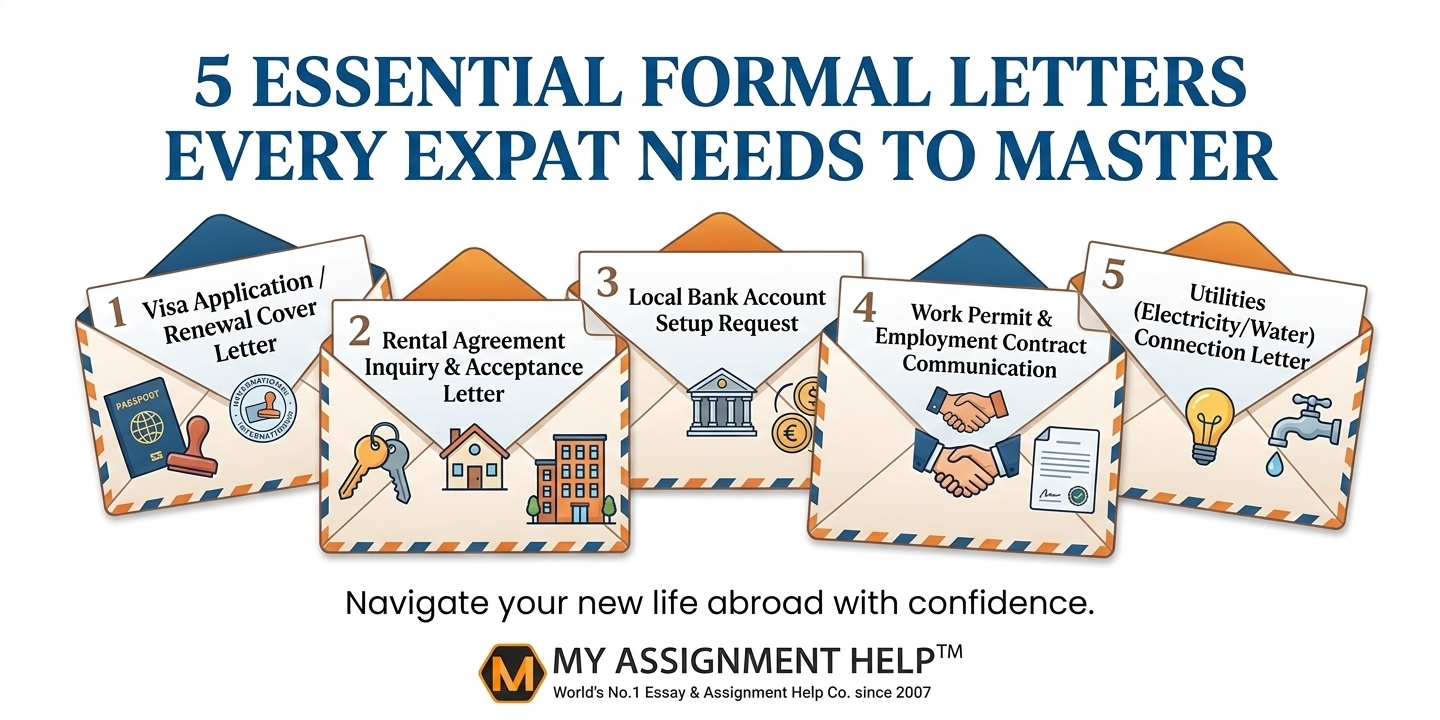
Relocating to the United States is more than just a change of scenery; it is a complex navigation of administrative, legal, and social systems. For the nearly 45 million foreign-born residents currently living in the U.S. (Pew Research Center, 2024), the ability to communicate effectively through formal correspondence is a vital survival skill. Whether you are applying for a professional role in Manhattan or leasing an apartment in Chicago, the “American style” of formal writing—direct, concise, and results-oriented—is the gold standard.
In the U.S., a poorly formatted letter isn’t just a minor oversight; it can be a barrier to entry. From USCIS officers to property managers, officials often judge your credibility based on the precision of your documentation. Understanding the nuances of a personal letter format is a great starting point, but when the stakes involve your residency or career, the complexity of formal “Business English” requires a deeper dive.
Navigating these cultural expectations can be daunting, especially if English is your second language or if you are transitioning from a more circular communication style. Many successful expats bridge this gap by utilizing professional letter writing services to ensure their initial points of contact with U.S. institutions are flawless, culturally aligned, and legally sound. This investment in professional drafting often saves months of back-and-forth delays in visa processing or job hunting.
1. The Letter of Intent (LOI) for Housing
In competitive U.S. real estate markets like San Francisco or Austin, simply having the deposit isn’t enough. Landlords often receive dozens of applications for a single unit. A Letter of Intent (LOI) or a “Cover Letter for Renting” introduces you to the landlord, explains your employment status, and humanizes your application.
- Why it matters: It builds trust, especially if you lack a U.S. credit history.
- Key components: Proof of income, references, and a brief explanation of your move.
2. The US-Style Cover Letter for Employment
The American job market prioritizes “The Pitch.” Unlike some European or Asian CVs that are purely biographical, a U.S. cover letter must be a persuasive marketing document. It should highlight specific achievements using the STAR method (Situation, Task, Action, Result).
- Pro Tip: Avoid being overly humble. U.S. hiring managers expect you to clearly state your value proposition.
- Data Point: According to Glassdoor, a well-tailored cover letter can increase interview chances by up to 40% for candidates with non-traditional backgrounds.
3. Letter of Explanation (LoE) for USCIS
When dealing with the U.S. Citizenship and Immigration Services (USCIS), clarity is mandatory. If there is a gap in your employment, a discrepancy in your name, or a missing document from your home country, a Letter of Explanation provides the necessary context to prevent a Request for Evidence (RFE).
- Risk Factor: An RFE can delay visa processing by 60 to 90 days. A precise, professionally drafted LoE can mitigate this risk.
4. Formal Resignation and Reference Requests
Career mobility is a hallmark of the U.S. economy. When moving between roles, a formal resignation letter maintains your professional network. Similarly, requesting a Letter of Recommendation requires a specific formal structure to ensure your former manager includes the keywords future U.S. employers look for.
5. Dispute and Consumer Complaint Letters
From correcting a billing error with a utility provider to disputing an incorrect charge on a new U.S. credit card, formal dispute letters are your legal paper trail. In the U.S., the Fair Credit Billing Act protects consumers, but these protections often require written notification within 60 days of the error.
Key Takeaways for Expats
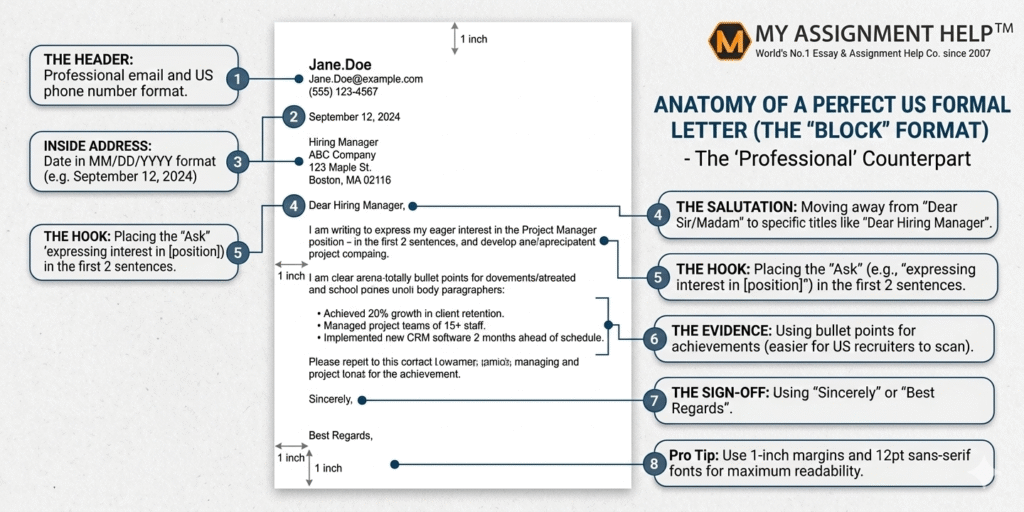
- Be Concise: American formal letters rarely exceed one page.
- Directness: Put your “Ask” or main point in the first paragraph.
- Formatting: Use 12pt Times New Roman or Arial, 1-inch margins, and a professional “Block” format.
- Call to Action: Always end with a clear next step (e.g., “I look forward to discussing this in an interview”).
FAQ Section
Q1: Do I really need a cover letter if my resume is strong?
Yes. In the U.S., the cover letter provides the “why” behind the “what” of your resume. It demonstrates your communication skills, which are highly valued in the American workplace.
Q2: How do I address someone if I don’t know their gender?
Avoid “Dear Sir/Madam.” Instead, use their job title (e.g., “Dear Hiring Manager” or “Dear Admissions Committee”) to remain professional and inclusive.
Q3: Can I use AI to write my USCIS letters?
While AI can help with templates, USCIS letters often require specific legal nuances and personal details that AI might hallucinate or over-generalize. Professional human review is highly recommended for immigration-related documents.
Data Sources & References
- Pew Research Center (2024): Statistical Portrait of the Foreign-Born Population in the United States.
- U.S. Bureau of Labor Statistics: Occupational Outlook Handbook – Importance of Communication in Management.
- Glassdoor Economic Research: The Impact of Tailored Correspondence on Candidate Conversion Rates.
Federal Trade Commission (FTC):Consumer Rights and the Fair Credit Billing Act Guidelines.