

Airfare prices can feel like a mystery but they’re not. Understanding price signals (how airlines adjust fares based on demand, timing, and data) can help you save 15–25% or more on your next trip.
There’s no single “magic day” that works every time, but combining data-driven patterns with real-time price signals and the right tools delivers consistent results for savvy travelers.
Whether you’re planning a domestic getaway or an international adventure, these insights will help you decode airline pricing and book with confidence.
Why Flight Prices Fluctuate – Understanding Price Signals
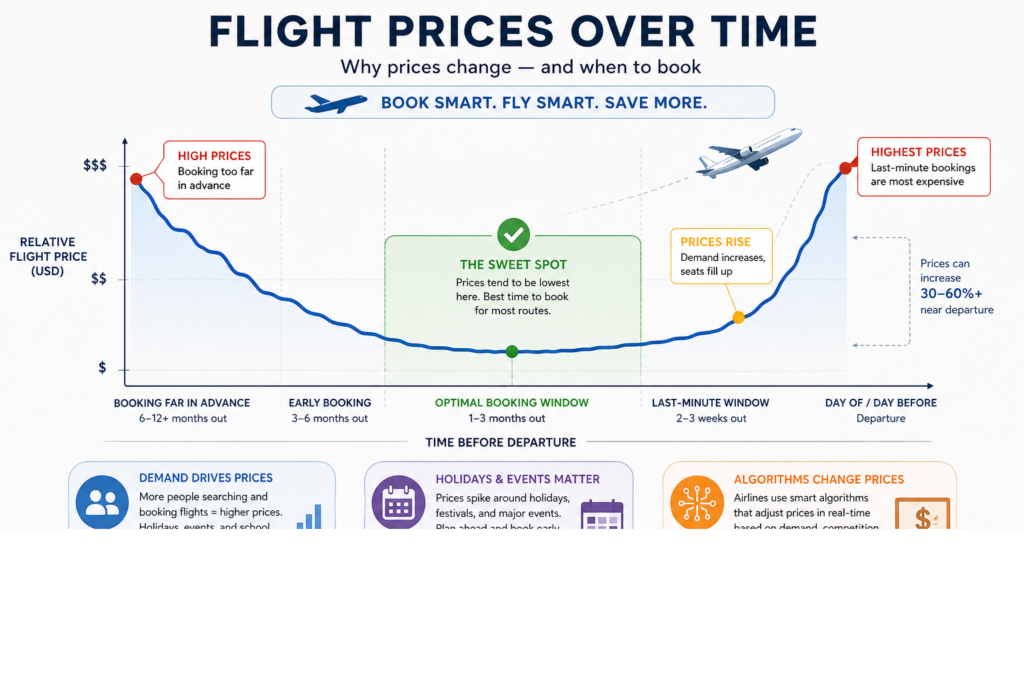
Airlines use sophisticated dynamic pricing algorithms that constantly adjust fares sometimes hundreds of times per day. These price signals reflect real-time factors like remaining seat inventory, competitor pricing, search volume, upcoming events, and historical booking patterns.
Key factors influencing price signals include:
- Seasonality and demand surges — Peak travel periods push prices up as inventory tightens.
- Day of the week — Business travel patterns create predictable dips.
- How far in advance you search — Too early and you pay a premium; too late and scarcity drives costs higher.
- External events — Holidays, school breaks, major conferences, or even weather disruptions send clear price signals.
The old “set it and forget it” approach no longer works because prices aren’t linear. A fare might drop unexpectedly due to a competitor sale or rise as seats fill. Learning to read these price signals turns random guessing into strategic timing.
Best Booking Windows by Data (Domestic vs. International)
Recent data from Google Flights, Expedia, and other aggregators reveals clear booking windows where price signals typically bottom out.
Domestic Flights
The sweet spot is often 15–86 days before departure, with many analyses highlighting around 34–42 days as statistically optimal. Booking in this window can deliver average savings of 15–25% compared to booking too far out or last-minute.
International Flights
You generally have more lead time 2–8 months is ideal, though some routes show strong price signals for savings as close as 31–45 days out.
Holiday travel follows its own rhythm. For Christmas, the lowest prices often appear 32–73 days before the holiday.
| Trip Type | Optimal Window | Avg. Savings Potential | Notes |
| Domestic | 1–3 months (~34–42 days) | 15–25% | Strongest mid-range signals |
| International | 2–6+ months | Up to $190+ | Earlier for peak seasons |
| Holiday (e.g. Christmas) | 32–73 days | Varies | Avoid last 3 weeks |
These windows are averages always cross-check current price signals for your specific route.
Best Days to Book and Fly – Weekly Price Signals
Weekly patterns create reliable price signals.
Best Day to Book: Recent 2026 Expedia data highlights Friday as a strong performer for booking, as business travelers wind down and more leisure inventory opens at lower rates. Traditional sweet spots like Tuesday, Wednesday, or Sunday remain competitive depending on the market.
Best Days to Fly: Midweek departures (especially Tuesday and Wednesday) often show the lowest fares up to 14% cheaper than Sunday flights in some cases. Friday departures can also deliver solid value. Avoid peak weekend travel when possible.
These weekly price signals are most pronounced on popular routes and during shoulder seasons.
Seasonal Price Signals – Best & Worst Months
Broader seasonal price signals help with long-term planning:
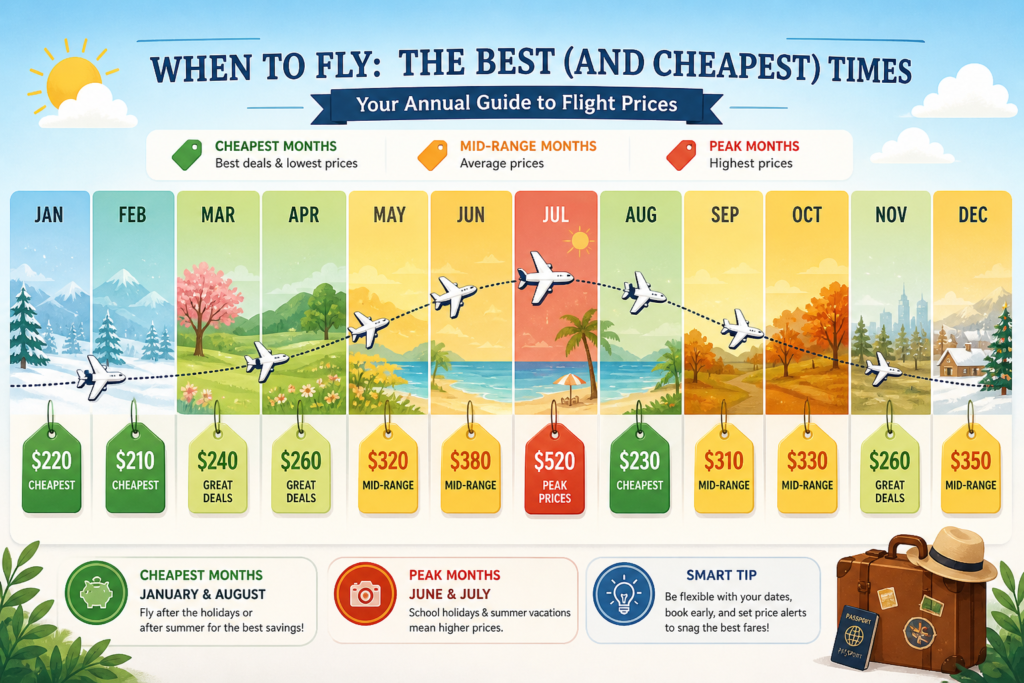
- Cheapest months: January (post-holiday lull), August (back-to-school dip in some markets), and shoulder seasons like early fall or late spring.
- Most expensive: Peak summer (June–July), major holidays, and spring break periods.
Post-holiday dips in January often produce some of the strongest downward price signals of the year. Monitoring these monthly patterns lets you align your travel with natural price valleys rather than fighting peak demand.
Tools to Monitor Price Signals in Real-Time
The best way to catch price signals as they happen is with dedicated tracking tools.
Top Tools:
- Google Flights — Excellent price tracking, date grid for flexible searches, and easy alerts. Set up tracking for specific dates or “any dates” to monitor route-wide price signals.
- Hopper — Uses predictive analytics to forecast whether prices will rise or fall, with push notifications for drops.
- Kayak / Skyscanner / Expedia — Robust alerts, price history graphs, and predictors. Great for comparing multiple airlines quickly.
Other Strong Options:
- Going.com (formerly Scott’s Cheap Flights) for curated deals.
- Airfarewatchdog for error fares and flash sales.
Pro Tip: Set alerts as soon as you have rough dates. Watch for sudden drops these are your strongest real-time price signals to book.
Quick Start with Google Flights (Step-by-Step):
- Search your route and dates.
- Click “Track prices.”
- Enable notifications.
- Check the price graph regularly for emerging price signals.
Advanced Strategies & Additional Price Signals
Beyond basic timing, layer these tactics:
- Stay flexible — Shifting dates by even 1–2 days can unlock better price signals.
- Incognito mode & cookie management — Can help avoid some dynamic pricing adjustments (though results vary as airlines use more sophisticated tracking).
- Points and miles — Award availability often follows different price signals than cash fares check 10–11 months out for initial release, then again closer to departure.
- Monitor competitor fares and load factors — Indirect price signals visible through tools or airline apps.
- Error fares and flash sales — Sign up for alerts; these represent extreme short-term price signals.
Combining flexibility with tool notifications maximizes your ability to act on favorable movements.
Common Mistakes to Avoid
- Booking too far in advance (you often pay a “first dibs” premium).
- Waiting until the last minute (scarcity drives sharp upward price signals).
- Ignoring or delaying alerts (prices can rebound quickly).
- Relying on only one tool or source (cross-reference for stronger confirmation of price signals).
- Being too rigid with dates or airports.
Conclusion & Actionable Takeaways

Mastering price signals transforms flight booking from stressful guesswork into a repeatable system. By combining the latest data, awareness of seasonal and weekly patterns, and real-time tools, you can consistently find better deals.
Your 2026 Flight Booking Action Plan:
- Identify your trip type and ideal window using the data above.
- Set price alerts immediately on Google Flights or Hopper.
- Check weekly for emerging price signals.
- Remain flexible on dates and airports where possible.
- Book decisively when a strong signal aligns with your needs.
- Review one week before departure for any last-minute drops.
Start tracking your next trip today with Google Flights. Subscribe to travel deal newsletters for extra price signals delivered to your inbox. Happy travels and happier savings!
FAQ
Is Friday really the best day to book flights in 2026?
Recent data shows Friday performing strongly for many routes, though Tuesday/Wednesday remain solid depending on the market. Always verify with current price signals.
How far in advance should I book domestic flights?
Aim for 1–3 months, with the strongest price signals often around 5–6 weeks out.
Do international flights get cheaper closer to departure?
Sometimes certain routes show good value 1–2 months out, but 2–6 months is generally safer.
Are flight price prediction tools accurate?
They’re directionally helpful and improve with more data, but treat them as supporting price signals rather than guarantees.
Should I book when I see a good price or wait?
If it fits your window and budget, book. Strong downward price signals can disappear quickly.
Can I still find deals last minute?
Yes, but it’s riskier and works best for flexible travelers monitoring real-time price signals.
How do I set up effective price alerts?
Use Google Flights or Hopper right after your initial search track both specific dates and flexible options.