

Introduction
You’ve just landed after an 11-hour flight. Your legs are cramped, your eyes are burning, and all you want is food. But here you are, standing motionless in a bustling airport food court, staring at 27 different options while your brain completely shuts down. Pizza? Sushi? That overpriced sandwich? Nothing sounds good. You end up buying something mediocre and feel annoyed at yourself for the rest of the evening.
This scenario is incredibly common. Welcome to decision fatigue while traveling — the mental exhaustion that hits when your brain has made too many choices in an unfamiliar environment.
Decision fatigue is the psychological phenomenon where the quality of your decisions deteriorates after a long session of decision-making. It’s like a muscle that gets tired. In everyday life, it might show up as mindless scrolling or eating junk food after a long workday. But while traveling, the effect is amplified dramatically.
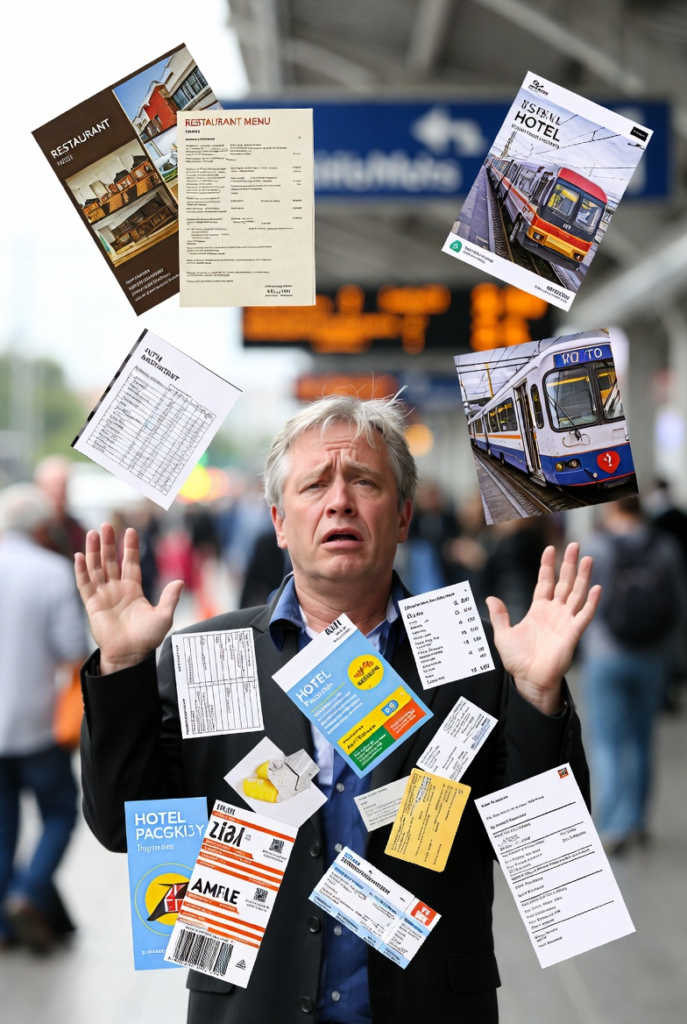
Travel throws hundreds of micro-decisions at you every single day: What time should I leave? Which route? What should I wear for unpredictable weather? Should I trust these reviews? Is this taxi safe? Where should we eat tonight? Should we splurge on this experience or save money?
Your brain simply wasn’t designed to handle this volume of novel choices while also managing jet lag, navigation, and sensory overload. The result? Your brain quits long before your suitcase does.
What Exactly Is Decision Fatigue?
Decision fatigue occurs when the mental energy required for making choices becomes depleted, leading to poorer decisions, impulsivity, or decision paralysis.
The concept stems from psychologist Roy Baumeister’s research on ego depletion — the idea that willpower is a limited resource, much like a battery. Every conscious choice you make uses up some of that battery. When it runs low, self-control weakens. You become more likely to take the path of least resistance, whether that’s buying an expensive souvenir you don’t need or skipping an activity you actually wanted to do.
In normal daily life, we already make thousands of decisions. But most of them are on autopilot: the usual route to work, the regular breakfast, the habitual evening routine. These habits conserve mental energy.
Travel removes almost all of those habits. Everything is new. Everything requires a choice. This is why decision fatigue while traveling feels so much more intense than in regular life.
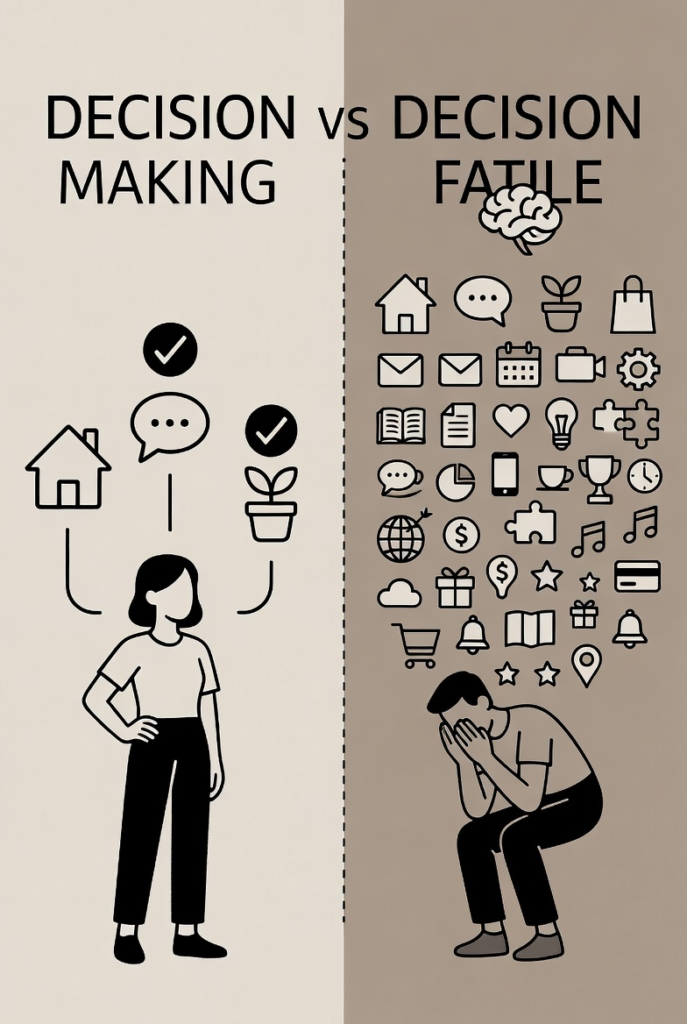
Why Traveling Triggers Severe Decision Fatigue
Travel is essentially one long string of high-stakes micro-decisions in an environment where the consequences feel bigger. Should you take the train or the bus? Is this restaurant worth the hype? Which beach is less crowded? What if it rains?
Several factors make it worse:
- Jet lag and physical exhaustion reduce your mental reserves from the start.
- Language barriers and cultural differences make even simple choices feel risky.
- Information overload from Google Maps, TripAdvisor, Instagram, and countless blogs creates analysis paralysis.
- Unfamiliar environments force your brain to stay in high-alert mode constantly.
- Emotional stakes are higher — you want the trip to be “perfect,” which adds pressure to every decision.
Compare this to home, where you might spend weeks without making a truly novel choice. On vacation, you can face dozens of new decisions before breakfast.
Signs You’re Suffering from Decision Fatigue While Traveling
Here are the most common warning signs:
- Irritability over small things — Snapping at your travel partner about where to eat or which way to walk.
- Defaulting to unhealthy food or expensive options — Choosing the easiest or flashiest choice instead of what you actually want.
- Analysis paralysis at simple choices — Standing frozen for 15 minutes trying to pick a coffee shop.
- Skipping experiences you wanted — “I can’t decide, so let’s just go back to the hotel.”
- Buyer’s remorse on purchases — Buying souvenirs or tours you later regret because it felt easier in the moment.
If several of these sound familiar, decision fatigue while traveling is likely draining your trip.
The Hidden Cost of Decision Fatigue on Your Trips
The effects go far beyond mild annoyance. Decision fatigue can:
- Ruin enjoyment and presence — You’re physically in paradise but mentally checked out.
- Waste time and money — Poor choices lead to bad meals, suboptimal tours, or unnecessary purchases.
- Strain relationships — Couples and families often argue more during vacations because everyone is mentally depleted.
- Lead to travel burnout — That post-trip exhaustion that makes you need another vacation.
Many people return from trips feeling more tired than when they left — not because of the travel itself, but because of constant decision-making.
8 Practical Ways to Beat Decision Fatigue While Traveling
1. Pre-Trip Planning – Decide Major Choices Before You Leave
Spend time before departure finalizing big decisions: accommodation, major transportation, and must-do activities. Create a loose daily framework without over-scheduling. The more you decide in advance, the less mental load you carry.
2. The Power of Routines
Establish small daily habits while traveling. Return to the same café for breakfast, have a consistent morning ritual, or use the same type of transportation. Routines restore a sense of normalcy and save decision energy.
3. Decision Limits – Set a Daily Decision Budget
Consciously limit choices. For example, decide you’ll only evaluate two dinner options instead of twenty. Cap the number of attractions per day. This “decision budget” prevents overload.
4. Meal Planning Strategy
Research or book a few key meals in advance. Use apps to find highly-rated spots near your location and make reservations. On other days, designate “exploration meals” where you allow spontaneity without pressure.
5. Choice Architecture – Use Tools Like the “2-Option Rule”
Never give yourself more than 2-3 real options for any decision. Ask: “Option A or Option B?” This simple hack dramatically reduces paralysis.
6. Digital Detox & Information Diet
Limit review apps and social media while traveling. Set specific times to check maps or reviews. Too much information fuels anxiety and fatigue.
7. Delegate Decisions
Share the load. One person handles food decisions, another handles navigation. Alternate days of being the “decider.” Solo travelers can pre-commit to certain rules (e.g., first decent restaurant you see).
8. Recovery Tactics – Scheduled Rest Days and Buffer Time
Build in full rest days with zero agenda. Include buffer time between activities. Mental recovery is just as important as physical rest.
Tools & Resources That Help
- TripIt or Google Trips — Automatically organizes bookings and reduces daily planning.
- Notion or Google Docs templates — Pre-made travel planners and decision frameworks.
- Packing list apps (like PackPoint) — Eliminate packing decisions.
- Simple decision frameworks — Use pros/cons lists only for big choices; trust intuition for small ones.
Having the right tools turns chaotic decision-making into a smooth process.
Conclusion
Decision fatigue while traveling is real, but it doesn’t have to define your trips. By understanding why your brain quits early and applying practical strategies, you can travel with more joy, presence, and energy.
Travel should refresh your mind, not drain it. With smarter planning and fewer unnecessary decisions, you’ll return home feeling recharged instead of exhausted.
Have you experienced decision fatigue while traveling? Share your story or favorite tip in the comments below!
Frequently Asked Questions (FAQs)
What is decision fatigue while traveling?
It’s the mental exhaustion caused by making too many choices in an unfamiliar environment, which reduces decision quality and increases stress during trips.
How do I know if I have decision fatigue on vacation?
Look for irritability, trouble choosing simple things, defaulting to easy/expensive options, or feeling unmotivated despite being in a beautiful place.
Can decision fatigue ruin a vacation?
Yes — it can lead to arguments, wasted time/money, and lower overall enjoyment, but the strategies above can prevent this.
Is decision fatigue the same as travel burnout?
They are related but different. Decision fatigue is a daily mental drain; travel burnout is the cumulative exhaustion after multiple draining trips.
How many decisions do travelers make per day?
Often 200+ more than in normal life, depending on the destination and trip style.